Retail Architectural Photography for L'AGENCE's Madison Avenue Flagship
Paul Bennett Architects x L'AGENCE
Project: L'AGENCE Madison Avenue Flagship
Architect: Paul Bennett Architects
Location: 956 Madison Avenue, New York, NY
Project Type: Luxury Retail + Commercial Interior Architecture
Scope: Multilevel flagship boutique, including retail displays, seating areas, custom millwork, architectural lighting, and exterior storefront
Purpose: Architectural portfolio development, brand positioning, retail marketing, and communicating design intent
Size: Approximately 4,400 SF
A Different Kind of Luxury Retail Experience
When Paul Bennett calls about a project, I know it's going to be interesting.
I've known Paul since he was my structures professor at Columbia University, and he became one of my earliest clients after I started my photography business. Over the years, we've worked together on projects in New York, Los Angeles, Atlanta, and Montreal, so by the time his firm's latest L'AGENCE flagship came along, we already had a pretty good understanding of how each other worked.
L'AGENCE is a luxury fashion brand that combines a relaxed California lifestyle with Parisian sophistication. For its expanded Madison Avenue flagship, Paul Bennett Architects developed a retail environment that feels closer to an elegant residential dressing room, with warm lighting, carefully considered materials, custom clothing displays, and inviting seating areas.
The photography needed to reflect that same atmosphere.
For me, retail architectural photography begins with understanding what the architect intended the customer to experience. The proportions, lighting, materials, and individual design details all contribute to that experience, and the challenge is finding compositions that allow those decisions to come through naturally.
In this case, we also had to accomplish that while working inside a fully operational luxury boutique in the middle of Manhattan.
The Challenge of Photographing an Active Luxury Retail Store
The store was open.
The customers were shopping.
And Madison Avenue wasn't slowing down for us.
Photographing an occupied retail environment takes a little more coordination than most people realize. Customers were coming in throughout the day, browsing clothing, and using the dressing rooms, which meant we had to adjust the photography around the store's normal activity.
The objective was to produce eighteen strong architectural compositions in a single day, including the exterior storefront, broad interior views, residential-style seating areas, custom displays, and smaller details that helped define the design.
Getting through that shot list required preparation and a good understanding of what mattered most to the architect.
Working Around Customers and Store Operations
One of the advantages of working with Paul for so many years is that there's already a level of trust. He knows I'm paying attention to the details that are important to him, and I know when something needs to be adjusted before the photograph is made.
Paul, his wife Valerie, and members of the design team were all involved throughout the shoot. While I was working on one composition, they were preparing the next, reviewing details, adjusting furniture, and making sure the space was ready when I moved the camera.
That kind of collaboration makes an enormous difference.
If a customer entered an area we were photographing, we'd stop and move on to something else. There was no reason to interfere with the shopping experience, and having the design team involved meant we could make good use of those interruptions.
By the end of the day, we'd created eighteen finished compositions without needing to close the store for the photography.
Managing Manhattan Traffic and Weather
The exterior was another story.
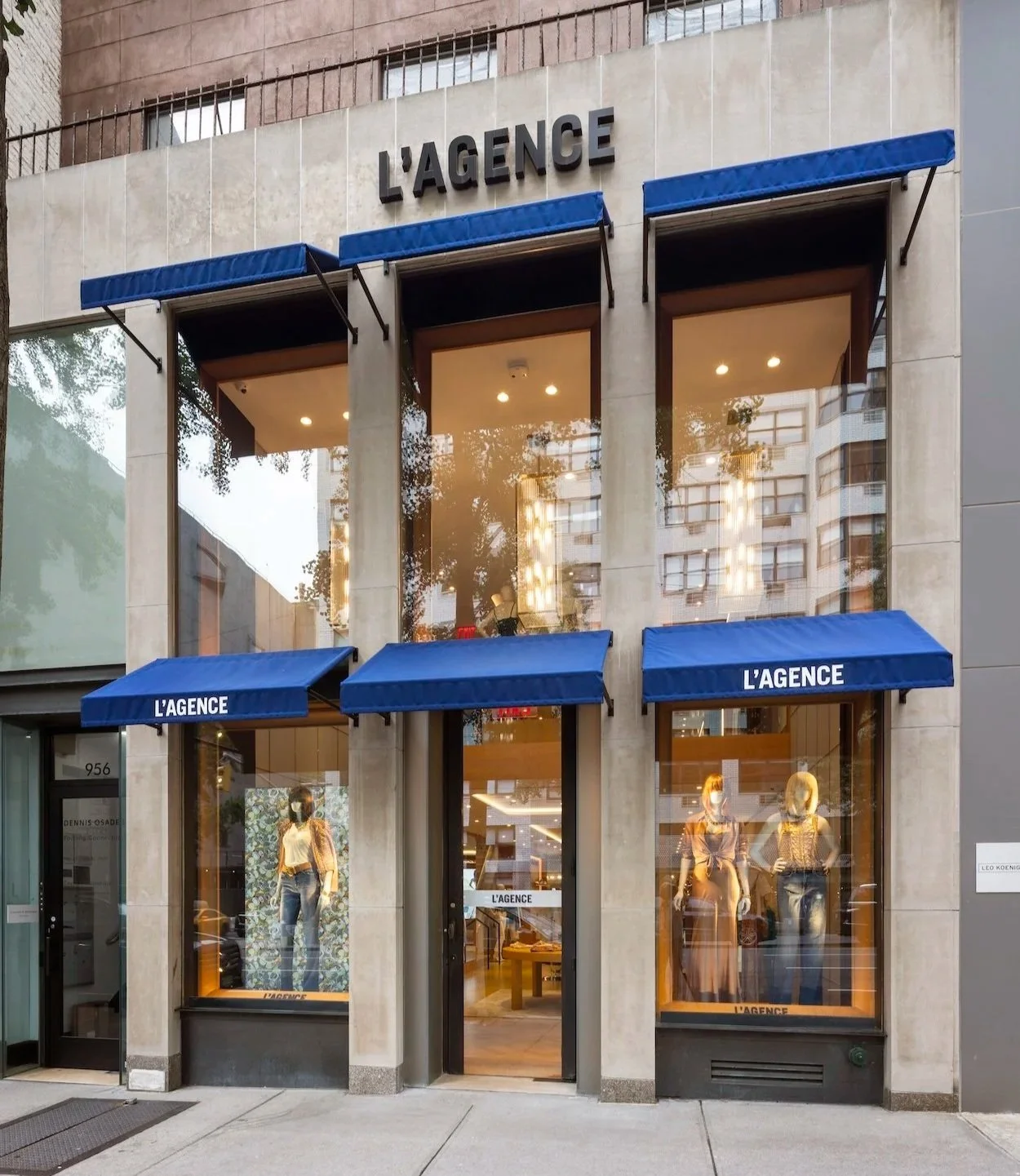
Photographing a storefront on Madison Avenue requires some patience, especially when you're dealing with delivery trucks, double-parked vehicles, pedestrians, and weather that doesn't always cooperate.
We'd been working inside most of the day, and after some light rain I wasn't particularly optimistic about getting the storefront photograph finished. I was already considering whether I'd need to return early the following morning, before traffic picked up.
Then, late in the afternoon, the vehicles blocking the storefront began to clear.
It was a narrow opportunity, and we needed to move quickly.
Paul's team stepped outside to help keep the area clear while I made two exterior compositions. Within a few minutes, the street returned to its normal activity.
That was all the time we needed.
It's a good example of how much planning and awareness go into architectural photography. You can prepare everything about a composition, but you still have to recognize when the conditions finally come together.
Capturing Design Intent Through Retail Architectural Photography
The overall design of L'AGENCE was built around a particular experience: customers should feel comfortable spending time in the store, exploring the collections, and enjoying an environment with the warmth of a private residence.
That intention influenced the way I approached the interiors.
Using Light to Preserve the Atmosphere
The warm LED lighting throughout the boutique was an important part of the design.
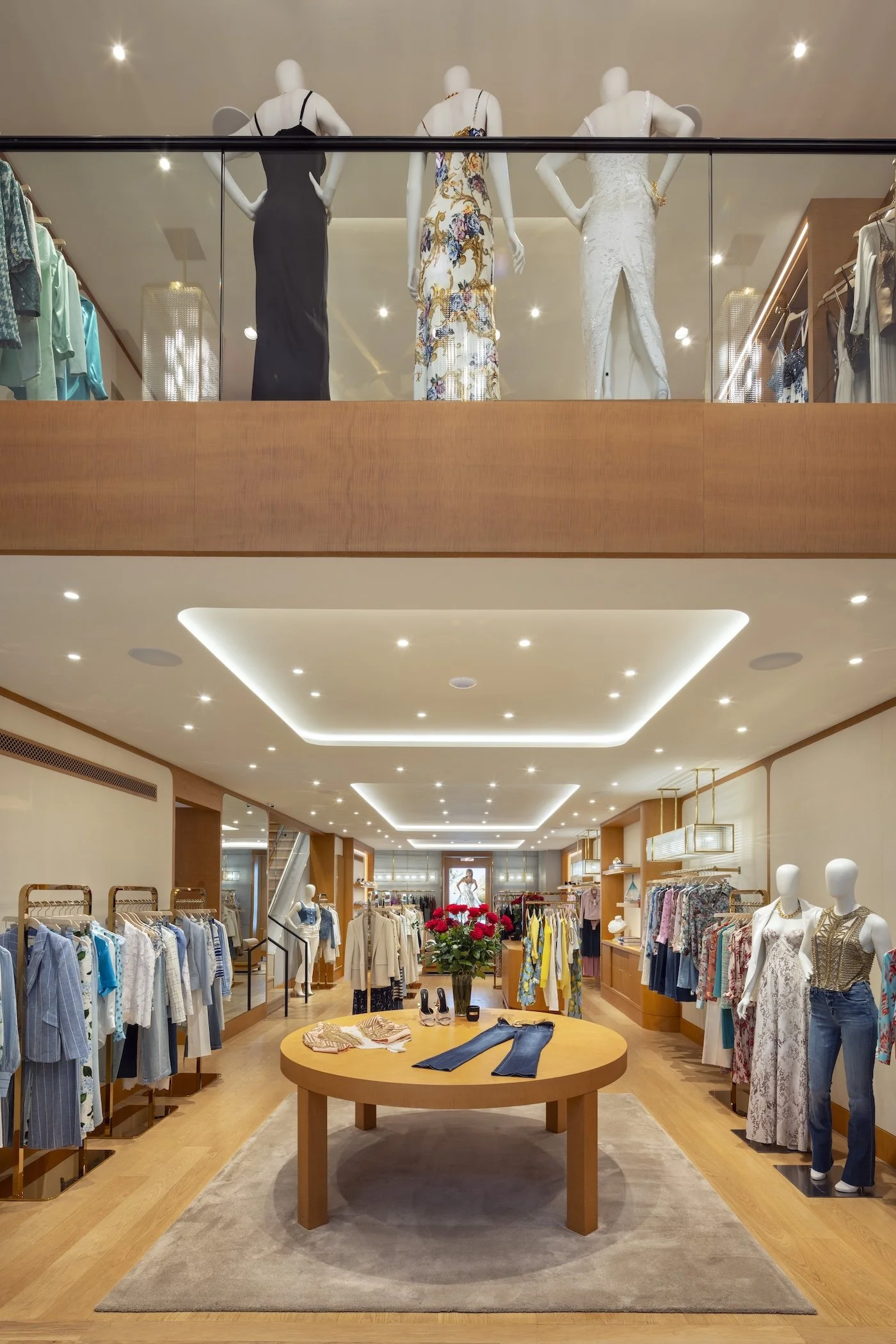
It softened the architectural finishes, complemented the wood millwork, and created a comfortable atmosphere around the clothing displays and seating areas. The lighting also established a visual connection between the different sections of the store.
When photographing an interior like this, I'm paying attention to how those light sources affect the materials and the overall feeling of the space.
There's a balance between creating a clean architectural photograph and maintaining the atmosphere that someone experiences when they actually walk through the room.
For L'AGENCE, preserving that warmth was particularly important because it reinforced the residential quality Paul had worked to create.
Photographing the Details That Matter
Some of the most interesting elements in a project are the ones people rarely notice.
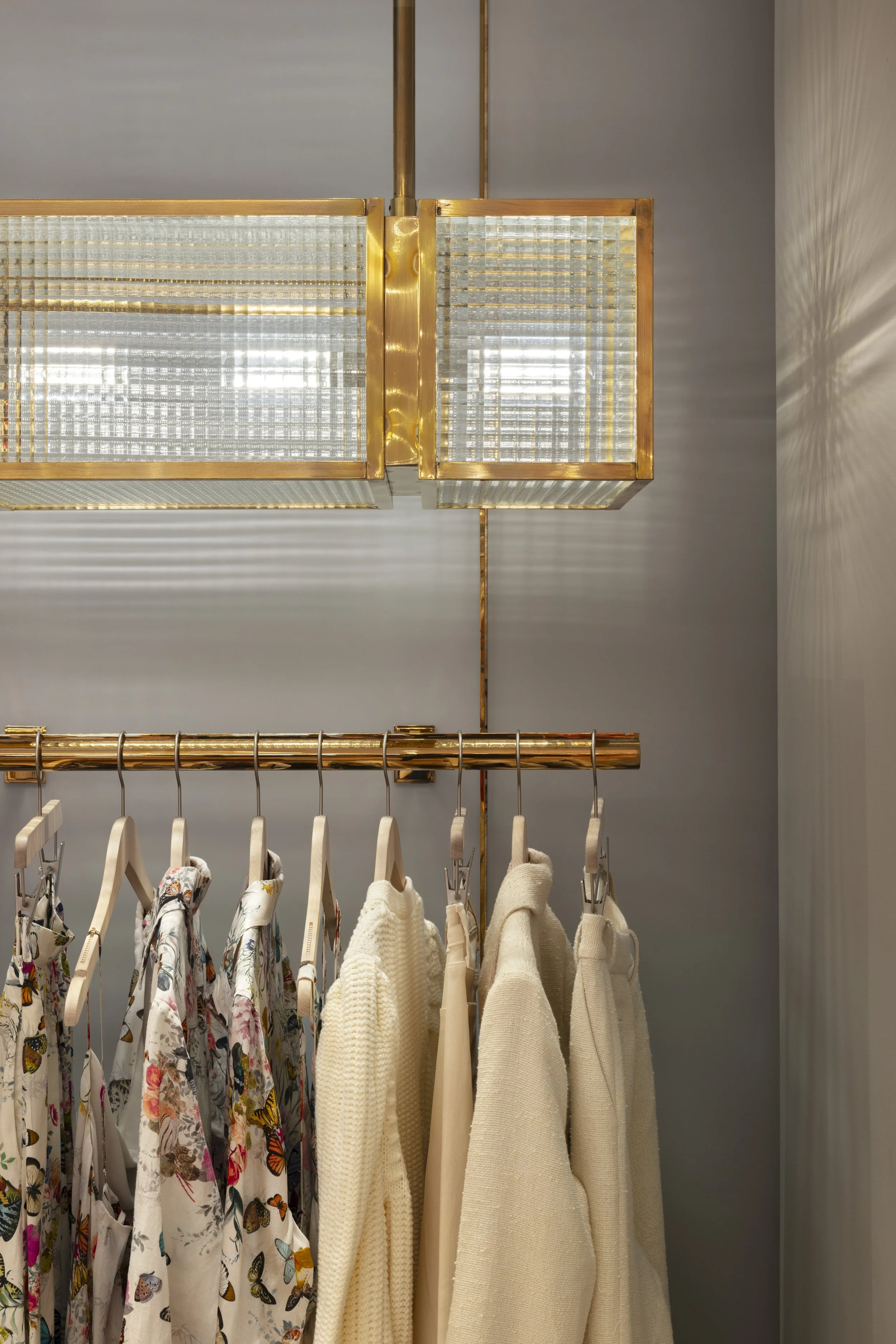
Paul showed me a custom clothing rail with small indentations spaced every two inches. It's a simple detail, but it controls how the garments hang and creates a consistent rhythm across the displays.
From an architectural standpoint, that kind of decision matters.
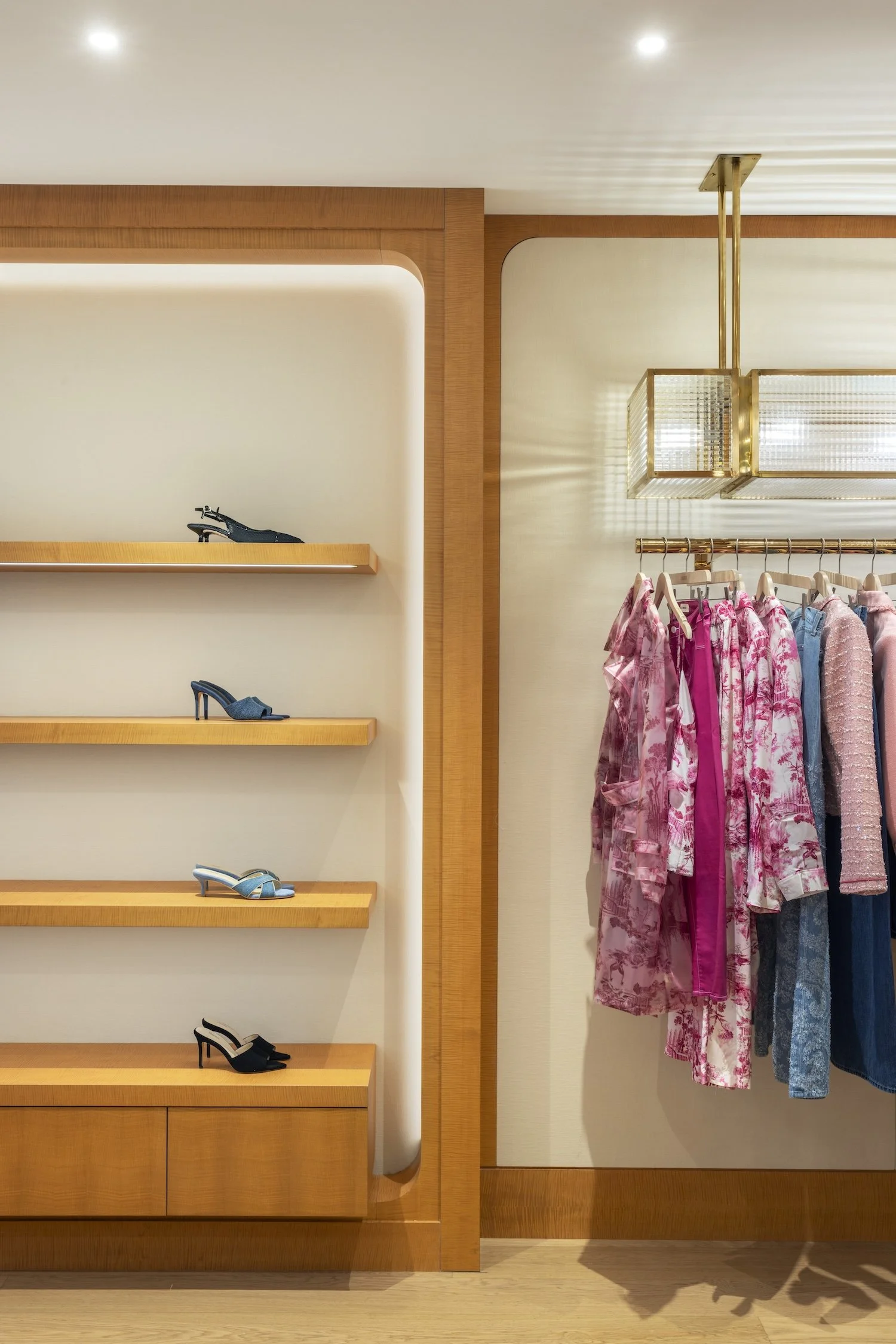
The same attention was given to the materials, display shelving, custom millwork, and jewelry cabinetry. During the project, one of the jewelry cabinets prompted further discussion about internal illumination, an example of how seeing the finished design can influence decisions about future installations.
These details are worth photographing because they reveal the thinking behind the architecture.
They're also valuable for an architect's portfolio, where a well-composed detail photograph can communicate craftsmanship and design discipline in a way that a wide interior view cannot.
Solving a Difficult Mirror Composition
One of the more technically interesting photographs involved a large mirror upstairs.
I wanted to photograph the shelving and display arrangement through the reflection, but the composition put me and the camera directly in the middle of the image.
With a mirror that large, there's only so much you can accomplish by changing your position.
Fortunately, I was working with my digital technician, Thomas Seely, who assured me that we could address the reflection during post-production.
He carefully removed the camera and my reflection from the finished photograph, preserving the composition and allowing the architectural details to remain the focus.
It's a good reminder of the value of having experienced people around you. There are moments when the best photographic solution comes from understanding what can be accomplished during the shoot and what can be refined afterward.
The Result
The final collection included eighteen architectural photographs covering the principal interiors, custom details, seating areas, display systems, and Madison Avenue storefront.
Together, the images communicate the atmosphere Paul Bennett Architects developed for L'AGENCE, while giving the architect and retail brand a versatile collection of photography for portfolios, presentations, marketing, and future business development.
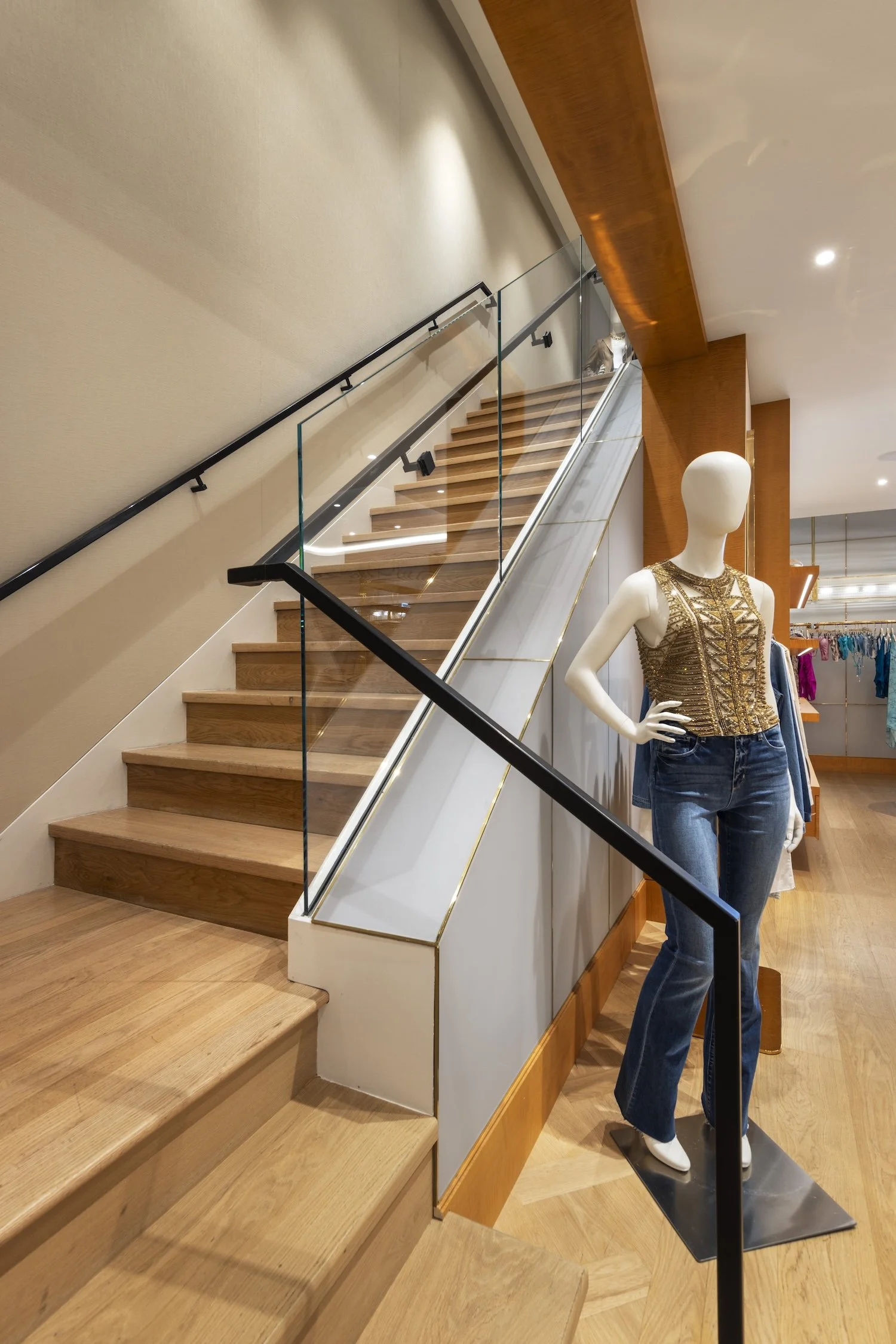
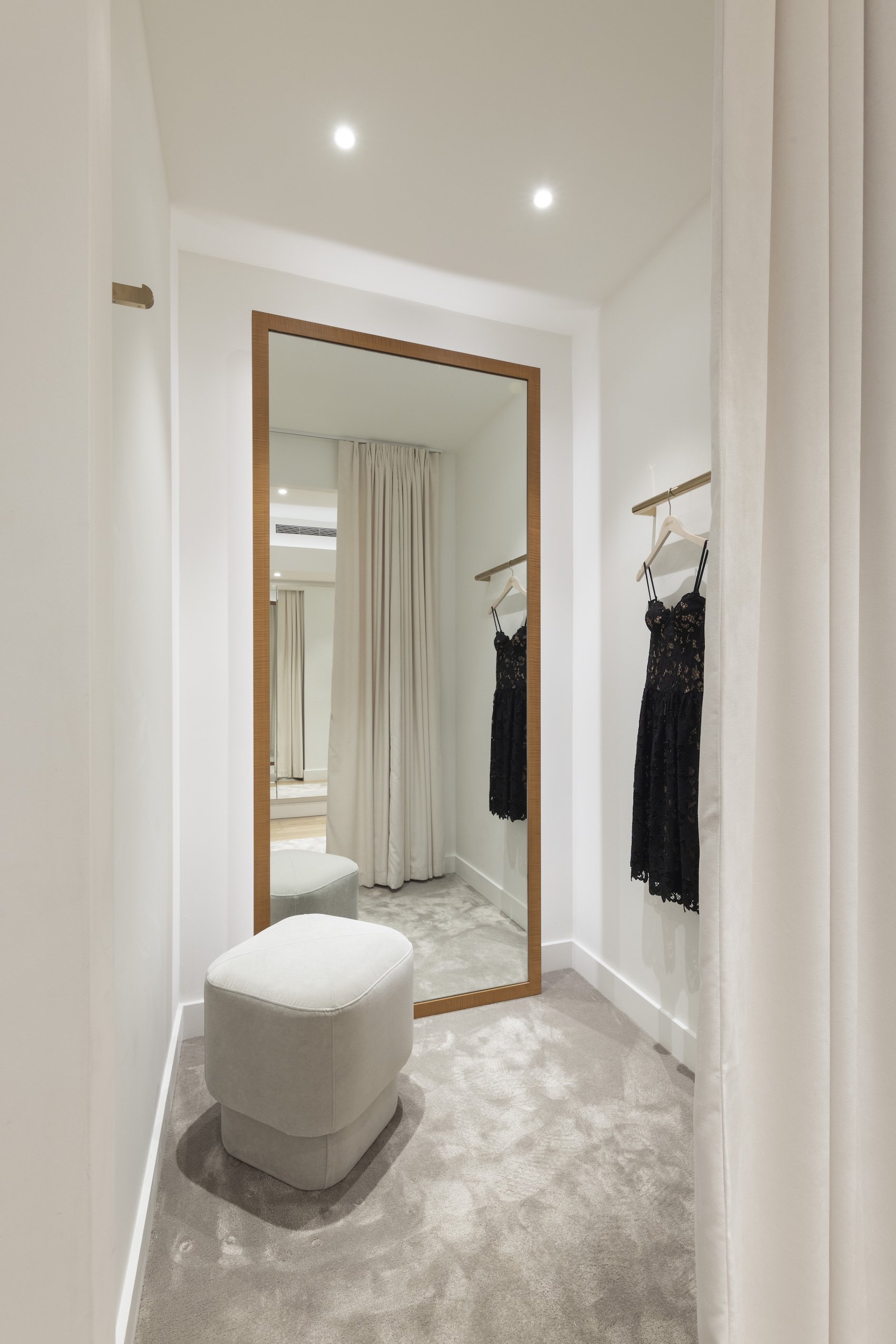
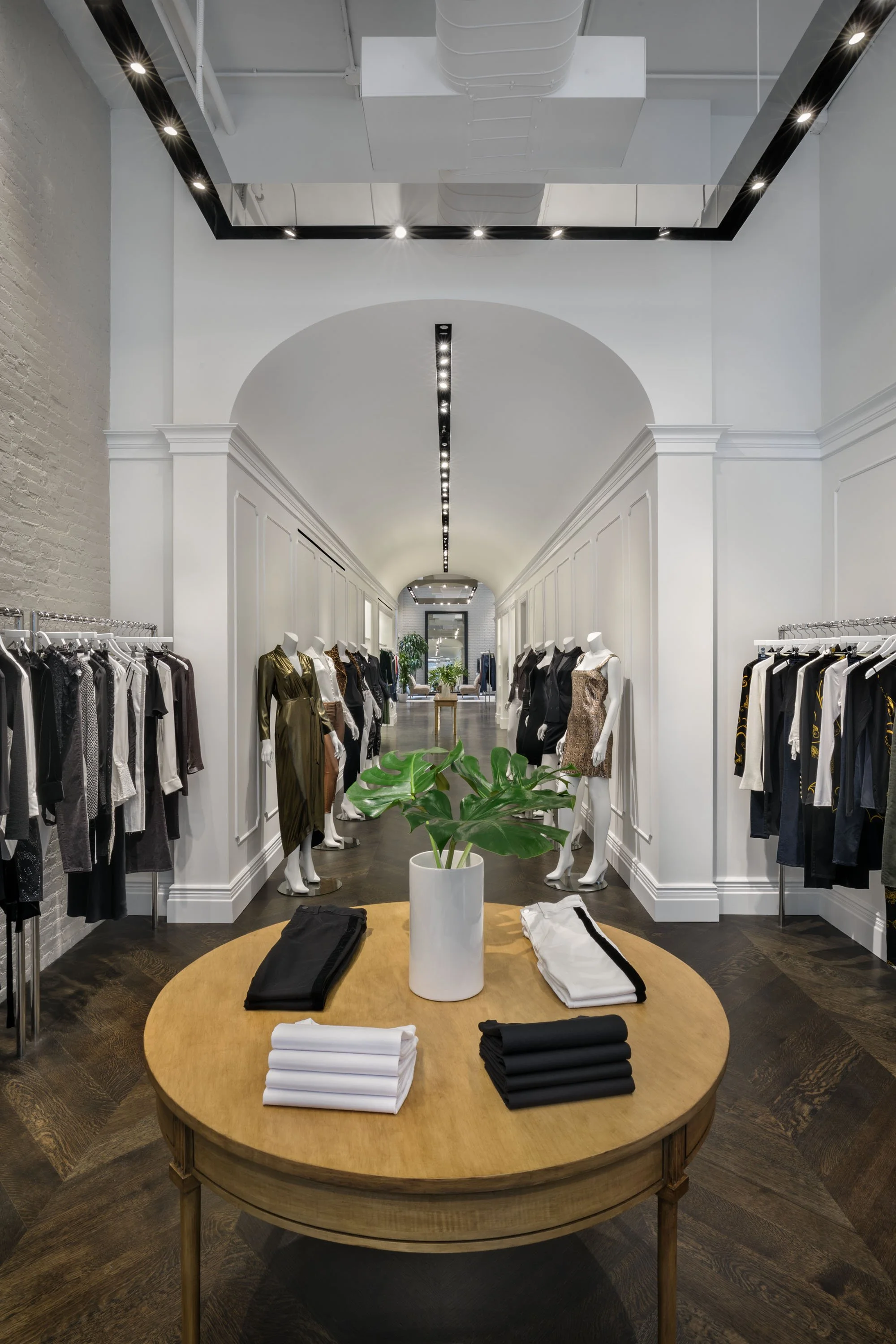
The broad interior compositions show how the store is organized, with clear sightlines between the merchandise, seating areas, and upper level. They also demonstrate how the warm lighting and architectural finishes work together to create the residential quality the design team wanted.
The detail images provide another level of information, drawing attention to the custom clothing rails, lighting fixtures, millwork, and display elements that contribute to the boutique's character.
For the exterior, the photographs establish the flagship's presence along Madison Avenue, where its blue awnings and illuminated storefront create a recognizable identity within the surrounding luxury retail district.
For Paul Bennett Architects, the photography adds another project to a longstanding portfolio of luxury retail work. The firm has continued its relationship with L'AGENCE on additional locations, and many of the details developed through these projects have informed subsequent designs.
For L'AGENCE, the images provide a way to communicate the experience of its flagship to customers, collaborators, and business partners who may never visit the store in person.
The value of a photographic library like this is that different images can serve different purposes while maintaining a consistent representation of the architecture and the brand.
Why Professional Architectural Photography Matters for Luxury Retail Projects
Luxury retail interiors involve a substantial investment in design, construction, materials, lighting, and brand identity. Every architectural decision contributes to how customers perceive the business and experience the space.
Professional architectural photography helps communicate those decisions to a much wider audience, particularly when the images are used in design portfolios, editorial features, marketing campaigns, and future project presentations.
For a project like L'AGENCE, the most important photographic considerations included:
Design Intent
The photography needed to communicate Paul Bennett Architects' vision of a welcoming, residential-inspired boutique. Composition and lighting were used to preserve the store's intimate atmosphere and show how the architecture supports the customer experience.
Material Quality
Custom wood millwork, brass clothing displays, decorative lighting, and carefully selected finishes are central to the design. Detail photographs give those materials the attention they deserve and help communicate the craftsmanship behind the project.
Spatial Clarity
The flagship includes multiple levels and distinct retail experiences. Carefully selected viewpoints allow viewers to understand how the seating areas, display systems, and circulation work together, while maintaining a sense of the store's proportions.
Brand Experience
A luxury boutique communicates a great deal about a brand before a customer ever interacts with the merchandise. The photographs needed to reflect L'AGENCE's particular balance of California ease and Parisian sophistication, creating imagery that feels consistent with the company's identity.
When these elements are photographed with care, the result becomes a long-term business asset for both the architect and the retail client.
For architects, the images support portfolio development, publication opportunities, award submissions, and conversations with prospective clients. For retail brands, the photography helps communicate the experience of a physical location through websites, digital marketing, public relations, and future expansion initiatives.
The investment in photography continues providing value long after the original shoot is complete.
Final Thought
Working with Paul on L'AGENCE reminded me how much architectural photography depends on understanding the people behind the project.
Paul and I have been working together for decades, and there's a certain efficiency that comes with that history. I understand the kinds of architectural decisions he's looking for, and he understands what I need to create the photographs.
On this project, we were constantly adjusting.
Customers came and went. Furniture was moved. Displays were reviewed. We waited for the street to clear, and we worked through a difficult mirror composition that required some help in post-production.
That's part of the process, and it's one of the reasons I enjoy this work.
Every architect has a different way of thinking about space, and every project presents its own set of circumstances. My job is to understand those decisions, determine which ones matter most, and find the compositions that communicate them clearly.
For L'AGENCE, the strongest photographs are the ones that make the boutique feel the way Paul intended: comfortable, refined, and carefully designed, with the merchandise and architecture working together.
That's ultimately what I want the images to accomplish.
When someone looks at the photographs, they should understand the atmosphere of the store and appreciate the thought that went into creating it, whether they're an architect reviewing a portfolio or a customer discovering the brand for the first time.
If you're planning a retail, hospitality, or commercial project and want photography that communicates the intent behind the architecture, let's talk.
In-House Representation: Julia Toke
US & Worldwide
+1 917 690 6000