How to Photograph Large-Scale Commercial Architecture
Vocon x Ken Ganley Mentor
Project: Ken Ganley Car Dealership
Architect: Vocon
Location: 8505 Mentor Avenue, Mentor, Ohio
Project Type: Automotive Dealership + Commercial Architecture
Scope: Showroom and large-scale service facility supporting both consumer and commercial vehicles
Purpose: Marketing, brand positioning, and architectural portfolio development
Size: ~67,000 SF
This project pushed the boundaries of what a commercial architectural photographer typically encounters.
Located in Northeast Ohio, this dealership project illustrates the evolution of architectural photography in Cleveland, paralleling the emergence of larger, more design-focused commercial spaces. What could have been a simple automotive environment has been transformed into a more intentional space, both in its design and in the manner it is photographed.
A Different Kind of Dealership Interior Design
Most dealerships are designed to maximize inventory visibility, aiming for more cars, greater density, and increased sales. This project, however, took a different approach.
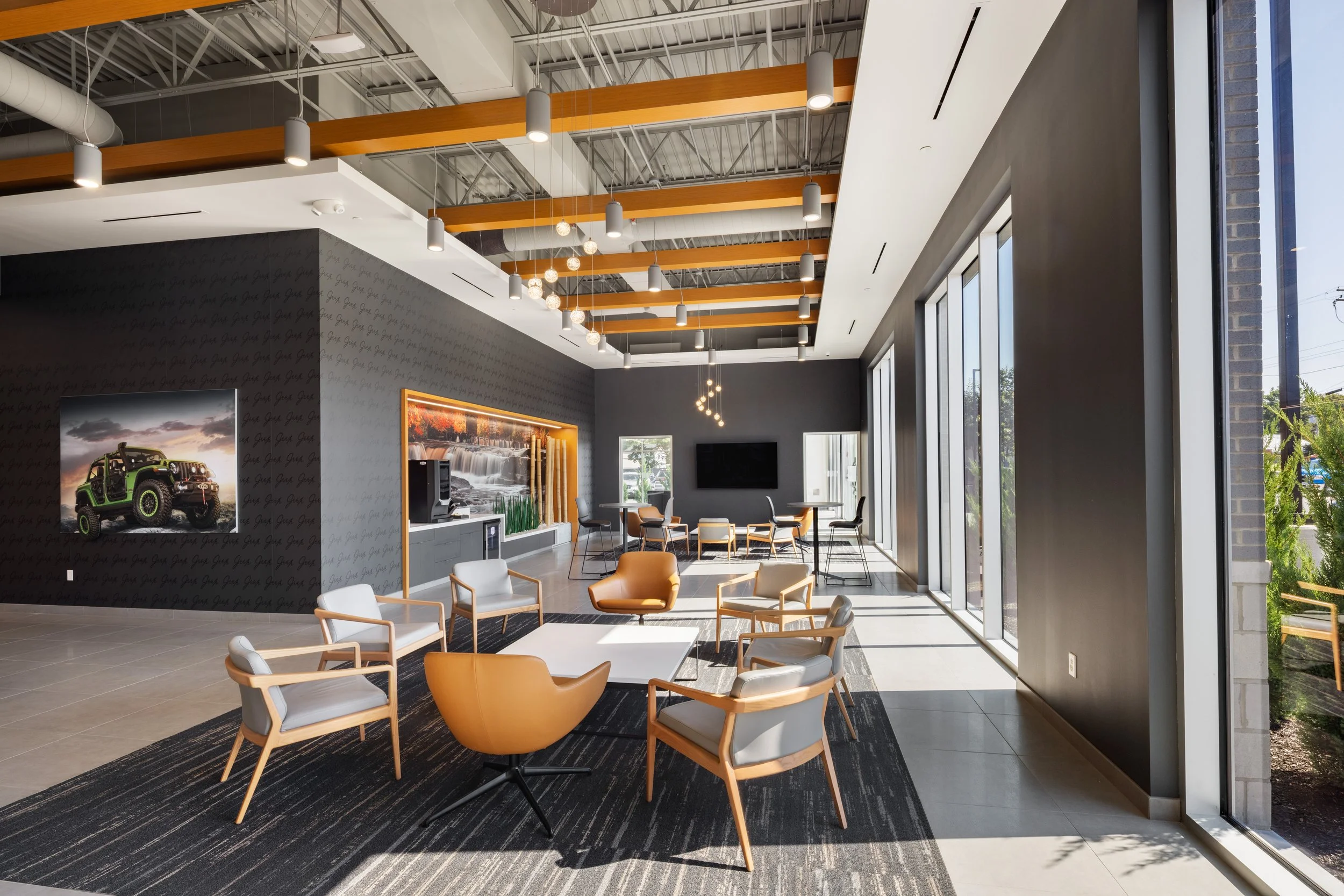
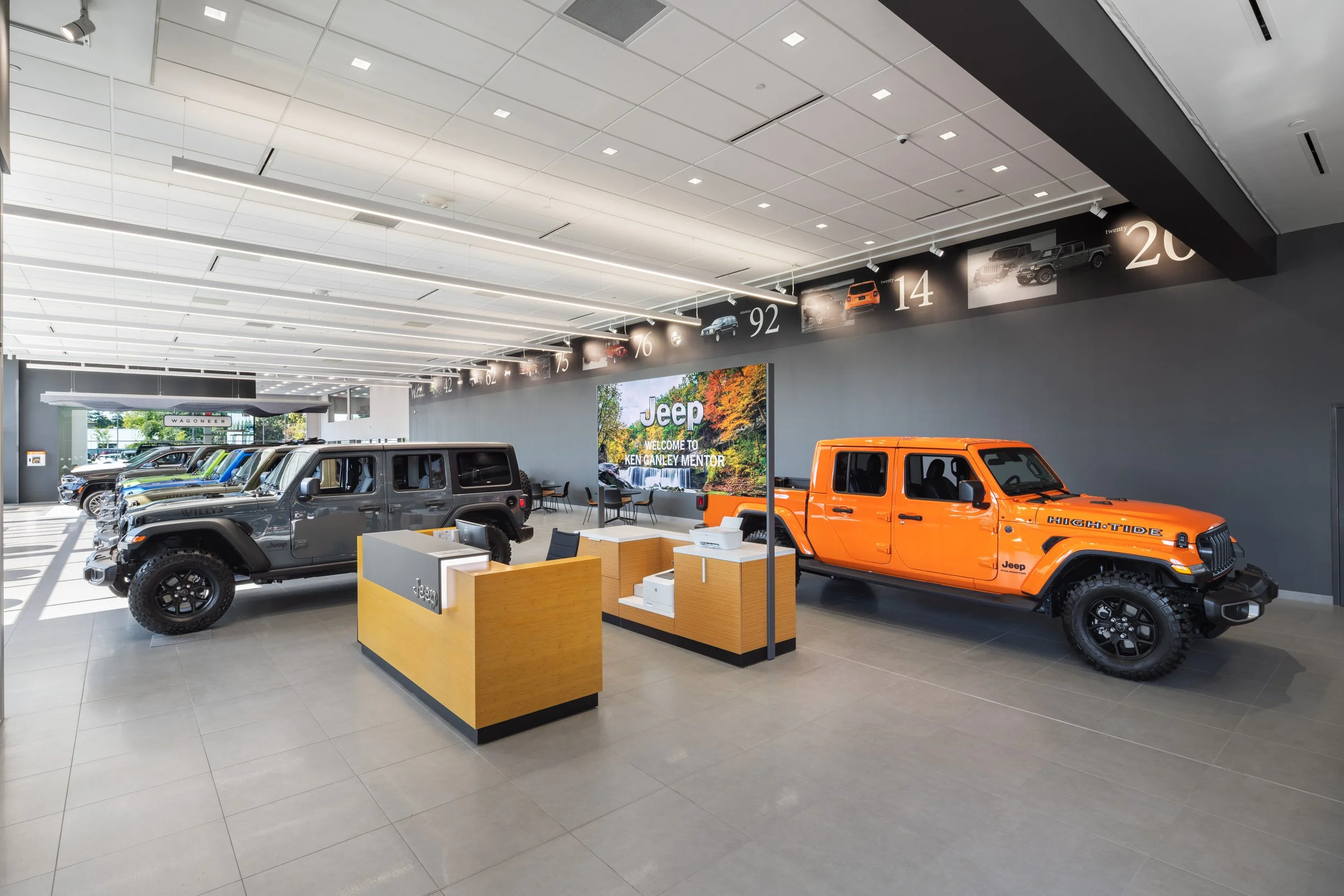
Designed by Vocon, the space features a light and open atmosphere with an intentionally restrained aesthetic. Natural daylight fills the showroom, and the layout allows the architecture to "breathe”. Even the exterior massing, while fundamentally simple, includes subtle variations and a clean, controlled palette.
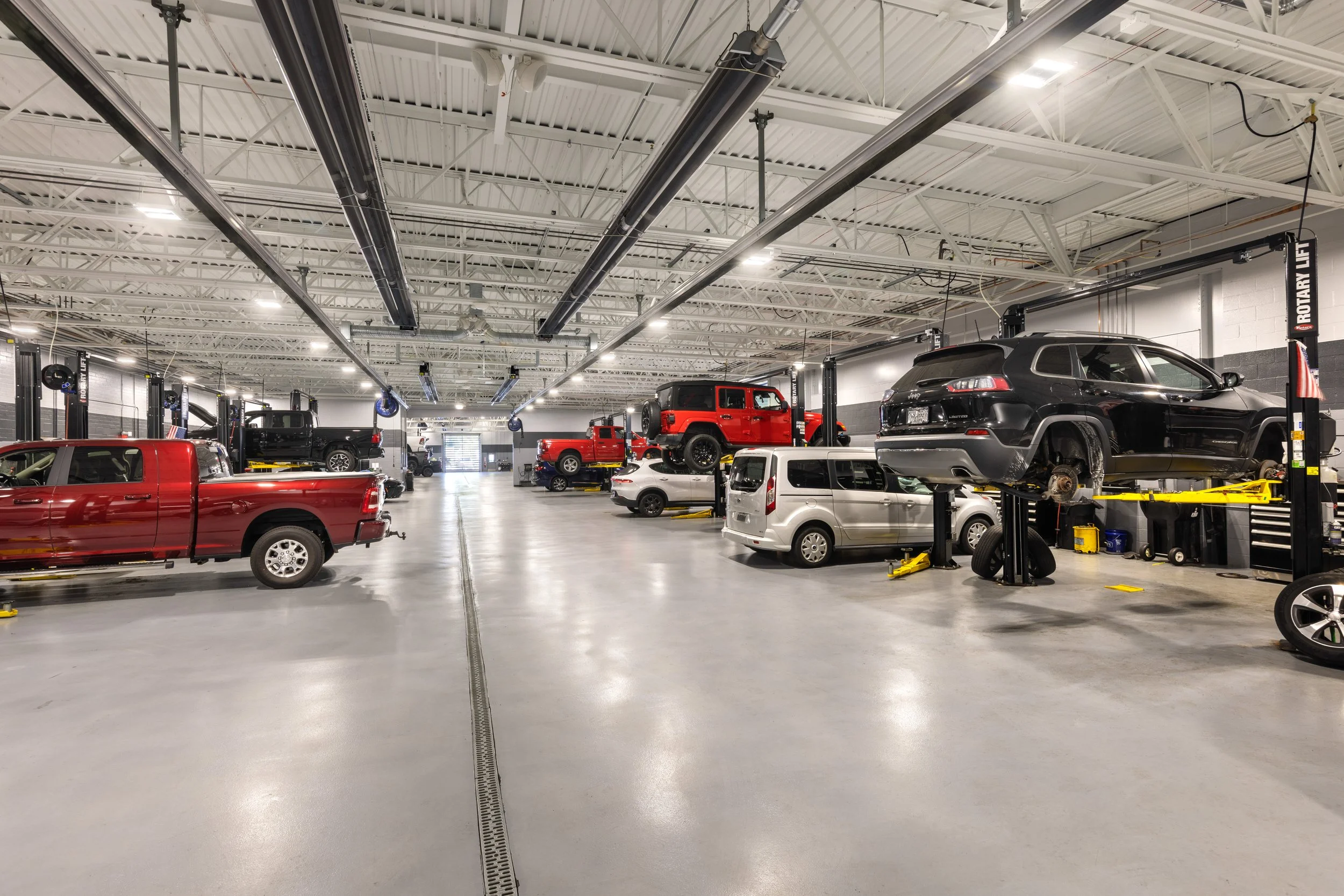
Additionally, the project features a significant service component to accommodate both standard vehicles and larger commercial vehicles. This dual focus on enhancing customer experiences while ensuring operational scalability is at the core of the project’s vision. By prioritizing both individual and commercial needs, we are setting a new standard in vehicle service solutions.
The Challenge of Photographing Large-Scale Interiors
The biggest challenge wasn’t lighting.
It was scale.
The building was so large that traditional lighting techniques became irrelevant. The volume of the showroom and service areas made it impossible to “shape” the space artificially in a meaningful way.
Instead, the solution came down to one thing: composition. When a space is this large and this minimal, every decision matters:
Where you stand
What you include
What you remove
There’s no hiding behind lighting or styling. The image either works—or it doesn’t.
How to Approach Composition at Scale
Before photographing, we walked the space with the design team.
We had a pre-conversation with Kerry and the broader team, then reviewed the project on-site with their designer. That process always comes first:
listen → understand → then shoot
Because designers, clients, and sales teams all see the space differently.
At one point, the showroom had been arranged to maximize vehicle presence. From a sales perspective, it worked. From a design perspective, it buried key architectural details—especially the flooring and spatial clarity.
We adjusted.
That’s the role of architectural photography: not just to show what’s there, but to show what was designed.
Capturing Design Intent in Architectural Photography in Cleveland
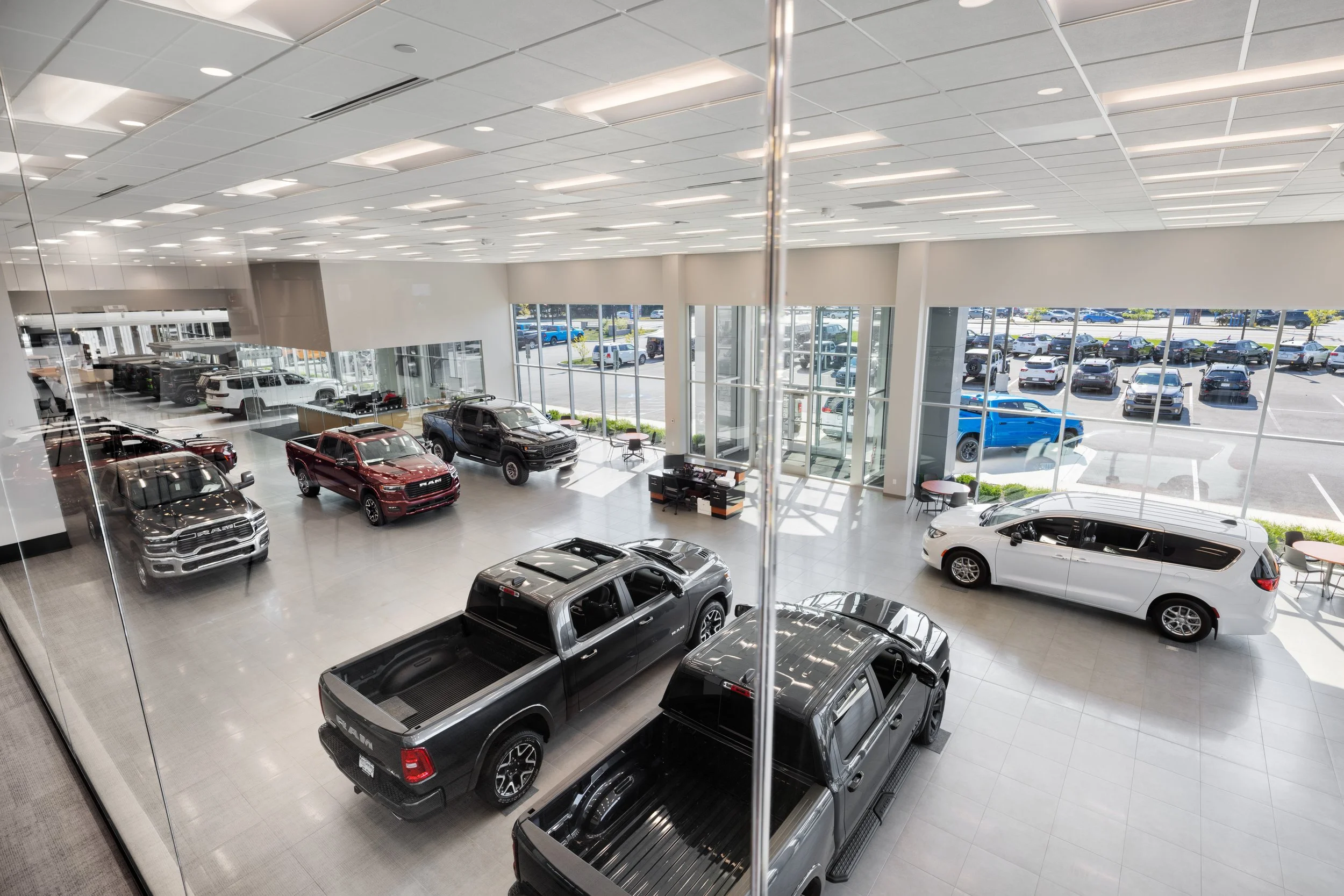
One of the most revealing moments came from a top-down view of the showroom. From this perspective, the layout became much clearer, highlighting several key aspects:
The organization of the space
The relationship between the vehicles and the architecture
The rhythm of the layout
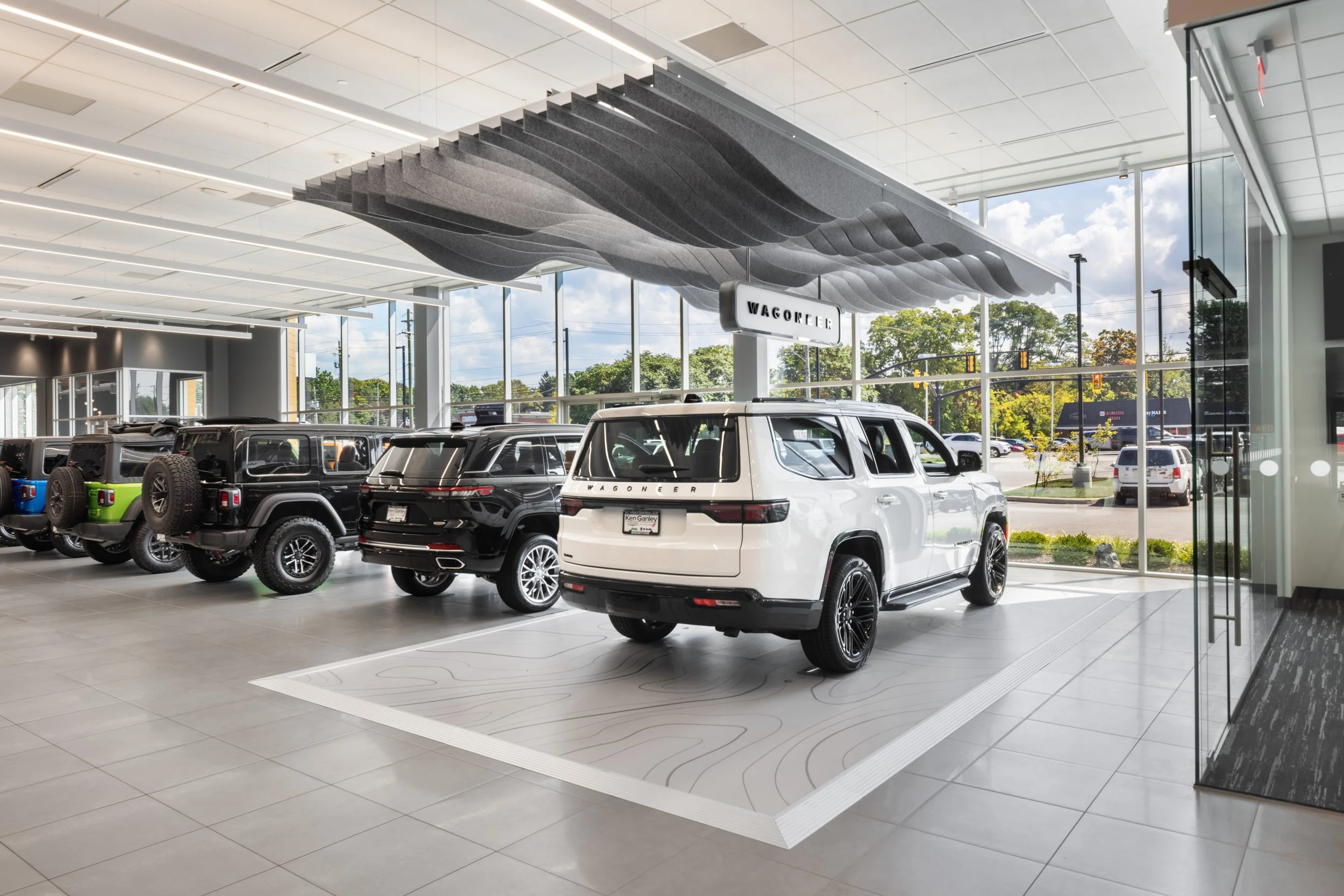
Another significant image showcased a high-end Jeep Wagoneer, symbolizing a broader shift in the industry. Automotive brands are increasingly moving upscale, and the environments surrounding them are evolving to align with this trend. The architecture plays a crucial role in this positioning, and the photography must effectively communicate that message.
Space to Build, Room to Show It
Projects like this highlight something unique about working in Cleveland.
There is space.
Space to build larger footprints.
Space to design with intention.
Space to create environments that wouldn’t be possible in tighter, more constrained markets.
In larger cities, projects are often shaped by limitations—tight sites, surrounding buildings, restricted sightlines. Here, architects can think differently. They can spread out. They can simplify. They can design for how a space is actually used, not just how it fits.
And that directly impacts how the work is photographed. As a commercial architectural photographer near Cleveland, the approach shifts. You’re not just compressing a space into a frame—you’re translating scale. You’re showing how a building breathes, how light moves through it, how the site supports the architecture. You’re not just documenting a project. You’re revealing how that space works at scale—and why it was designed that way in the first place.
Waiting for the Right Light
We scoped this as a half-day shoot and delivered eight final images, but the schedule was driven almost entirely by how the light moved across the building. Because of the scale, lighting wasn’t a viable solution here.
The showroom and service bays are large enough that introducing artificial light wouldn’t meaningfully shape the space—it would just get lost. So the approach shifted to working with natural light and building the shoot schedule around it. We started with interiors early in the day, when the light was more neutral and consistent. That gave us better control over reflections—especially with the amount of glass, polished surfaces, and vehicles in the space—and allowed us to lock in clean exposures without chasing shifting highlights.
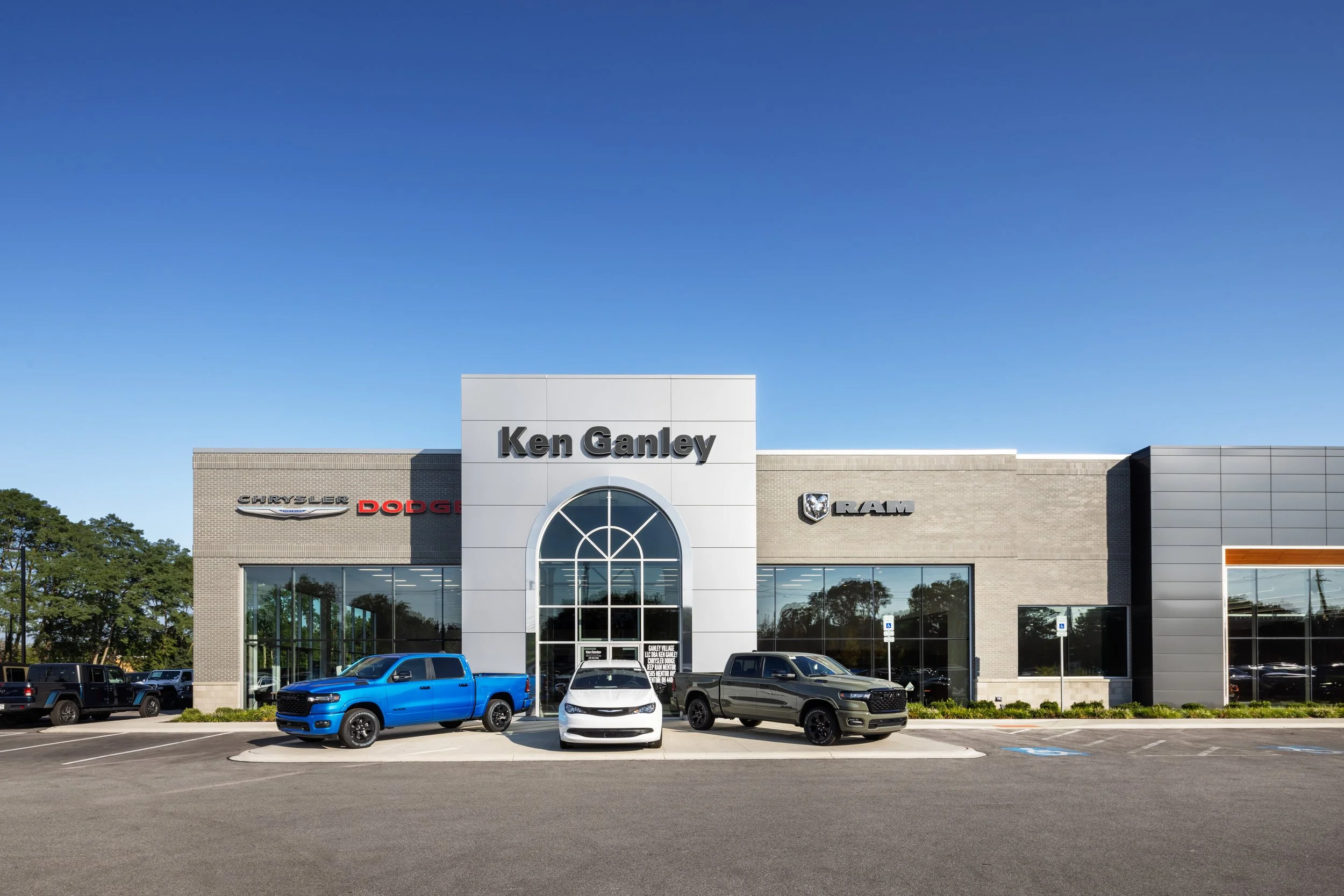
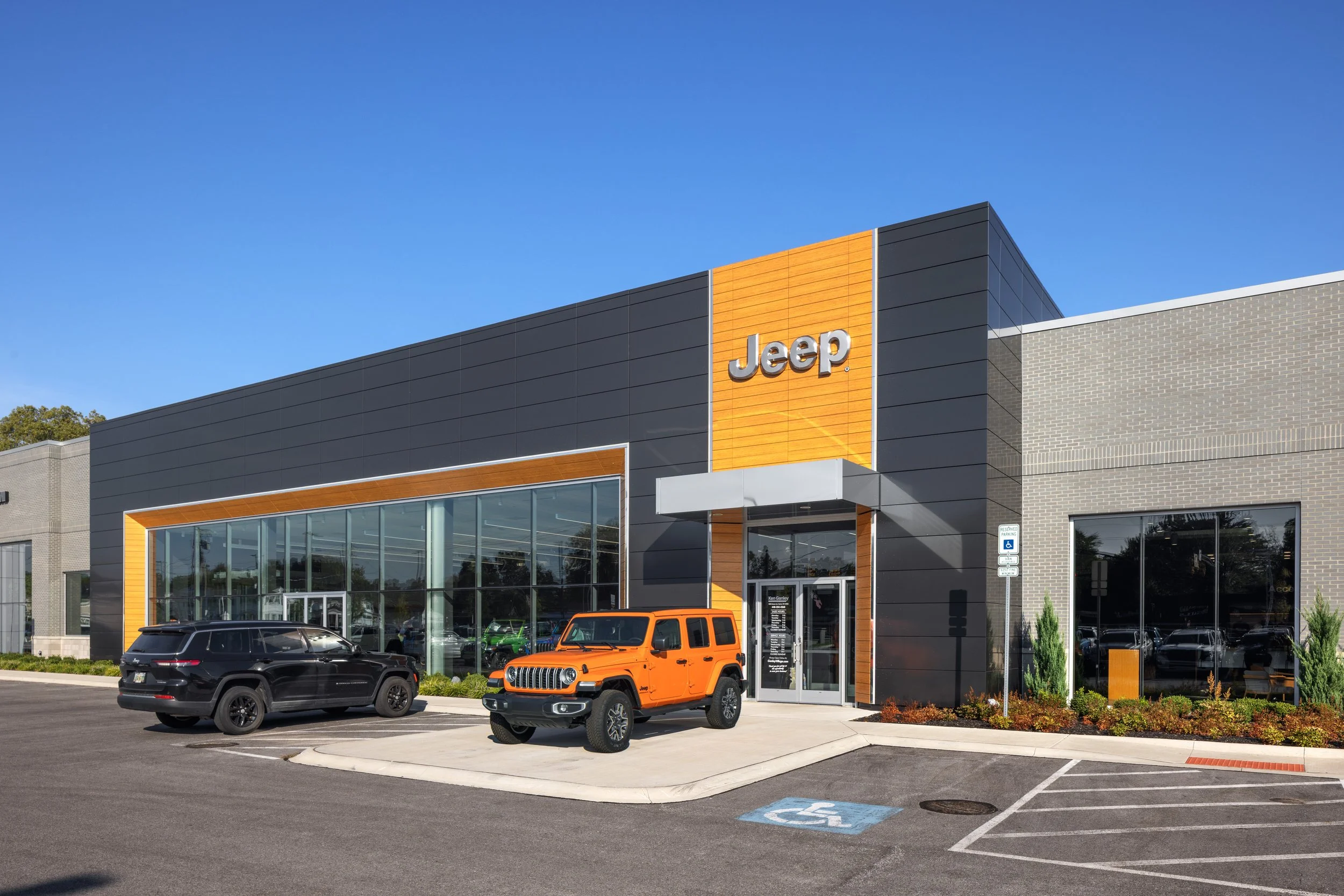
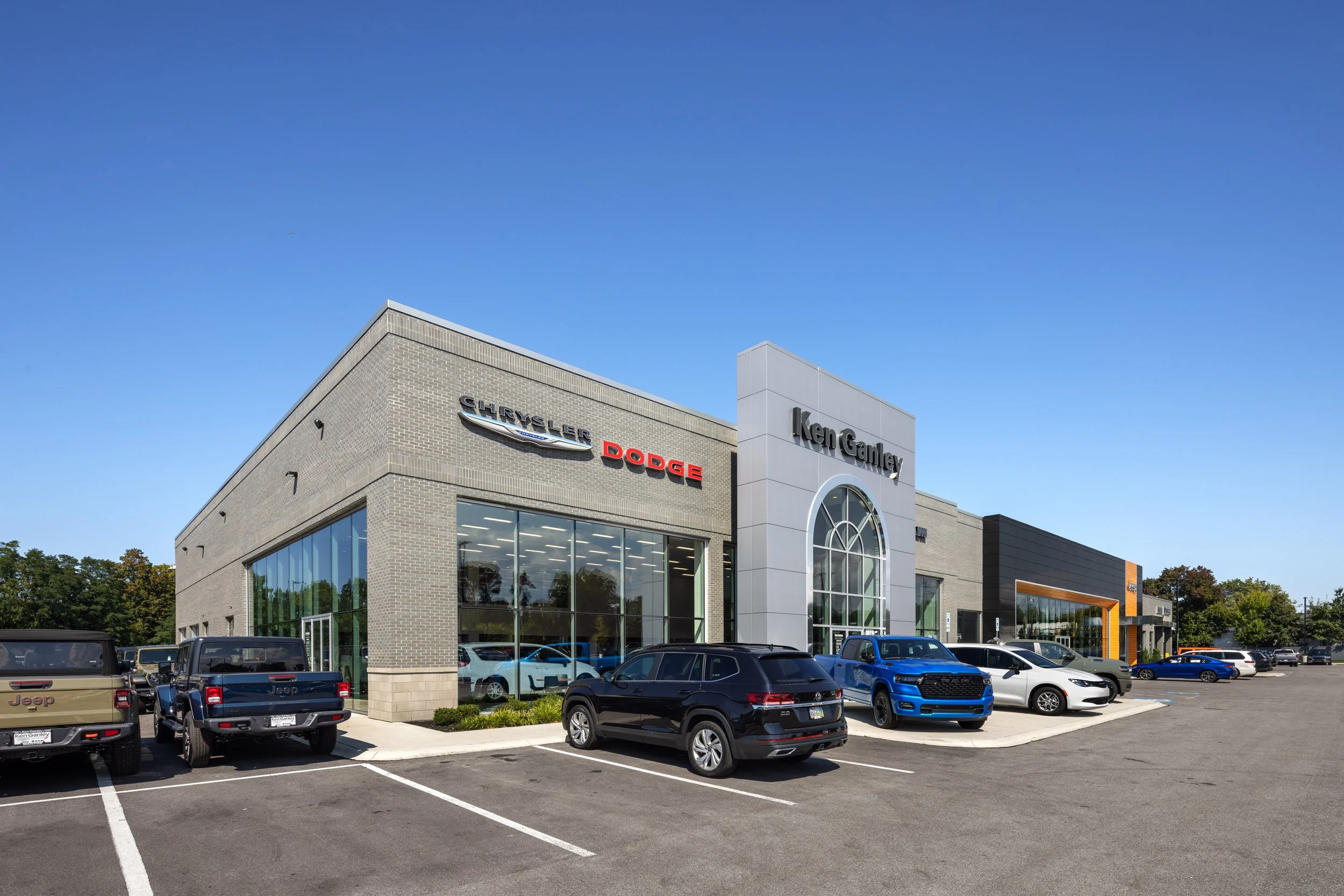
The exterior required a different approach. Early in the day, the façade reads flat. There isn’t enough directional light to define the edges or separate materials, so the building loses depth. We knew going in that the exterior wouldn’t work until later, so instead of forcing it, we waited.
As the sun moved, the building started to resolve. Edges sharpened, shadows created separation across the façade, and the overall massing became legible. That’s when the image works. There’s a relatively small window where everything aligns—light direction, contrast, reflections in the glazing, and overall balance across the elevation.
That’s what we were waiting for. At this scale, you’re not manufacturing the image—you’re recognizing when the building is finally presenting itself the way it was designed to.
The Result
The final image set was intentionally tight—eight images that focus on how the building actually performs, rather than trying to cover everything. The priority wasn’t coverage. It was clarity. The interiors communicate the scale of the showroom without losing control of the frame. Sightlines were chosen to show how the vehicles sit within the space, but without letting them overwhelm the architecture. You can read the floor, understand circulation, and see how the layout supports both display and movement.
In the service areas, the images emphasize volume and function. These are not secondary spaces—they’re a major part of how the building operates. The goal was to show that capacity without flattening it or making it feel generic. For the exterior, the images focus on organization and restraint. From the street, the building reads as two large volumes, but the façade treatment and site layout prevent it from feeling monolithic. The final images capture that balance—scale without visual noise.
For Vocon, the project expands their visible portfolio into a category that isn’t typically associated with high-design work. It shows their ability to apply the same level of thinking to a commercial automotive environment as they would to a workplace or hospitality. For Ken Ganley, the images reinforce the investment. The building is positioned as more than a functional dealership—it reads as a considered, high-value environment that supports both customer experience and operational scale.
And for future work, the project demonstrates something more broadly: the ability to photograph large, open, commercially driven spaces in a way that still communicates design intent. That’s not about the subject matter—it’s about the approach.
Why Professional Architectural Photography Matters for Commercial Projects
Investing in professional photography can be daunting for many businesses, but this project makes a compelling case for its value. The right photographic approach is vital for effectively capturing and communicating the essence of architectural design.
Without a strategic plan, the images might simply show cars parked in a well-lit room, lacking depth and context. In contrast, when approached thoughtfully, photography can convey the story of a $10 million architectural investment designed to enhance brand perception, elevate the customer experience, and drive long-term value for the business. The difference between basic photography and a strategic approach is subtle yet critical. Professional architectural photography effectively translates essential elements such as:
Design Intent
It showcases the vision and creativity behind architectural concepts, allowing viewers to understand the rationale and purpose behind every detail.
Material Quality
High-quality images capture the textures and materials used, demonstrating durability and craftsmanship that enhance the structure's overall appeal.
Spatial Clarity
Well-composed images provide a clear understanding of spatial relationships and how different areas of the design interact.
Scale
Photography can effectively illustrate the scale of a project, allowing clients to appreciate the grandeur and magnitude of the architectural investment.
Ultimately, professional photography connects the architect's vision with the client’s business goals, illustrating how the design can positively impact their brand. By focusing on high-quality imagery, commercial businesses can greatly enhance their marketing efforts, attract potential clients, and build a strong connection between their architectural design investments and the customer experience they aim to create.
Investing in professional architectural photography goes beyond merely capturing images; it involves telling a compelling story that resonates with audiences and highlights the true value of architectural design.
Final Thought
This project wasn’t about making the cars look good.
They already do.
The challenge was making sure the building read the way it was designed to—at the right scale, with enough separation to understand how the space is organized, and without letting everything inside it take over the image.
Because this type of project can fall apart quickly.
It’s a large, relatively simple structure. There aren’t a lot of architectural moves to hide behind. If the composition isn’t right, the space feels flat. If the timing is off, the building loses definition. And if the frame is too crowded, you lose the ability to understand how the showroom and service areas actually function.
So the images had to do a few things at once. They needed to show the vehicles, but not let them dominate. They needed to hold the building's scale without distorting it.
And they needed to keep the architecture legible—so you can see how the project was designed, not just what’s inside it.
That’s what this shoot was really about.
And it’s also what makes working in Cleveland interesting.
You get projects like this—larger footprints, fewer constraints, and clients who are willing to invest in the full environment, not just the minimum needed to operate. That gives the architecture room to be intentional, and it puts more pressure on the photography to represent that clearly.
For Vocon, this project expands how their work is seen. It shows that the same level of thinking they bring to workplace and interior projects can carry into a commercial environment like this, without losing clarity or control.
The goal for the images is clear: capture the building in a way that reflects its true stability and presence, just as it appears in real life.
Because if it doesn’t, you’re not documenting the project—you’re misrepresenting it.
If that’s the standard you’re aiming for, let’s talk.
In-House Representation: Julia Toke
US & Worldwide
+1 917 690 6000