Architectural Photography for Community-Focused Development, Urban Density, and Mixed-Use Design
Bialosky x Library Lofts — Cleveland Project Overview
Project: Library Lofts
Architect: Bialosky
Partners: NRP Group / Midwest Development Partners / Cleveland Public Library / Higley and Power Construction / Cleveland Foundation / LAND Studio
Location: 10555 Euclid Ave, Cleveland, Ohio
Project Type: Mixed-Use Residential + Public Library
Size: 158,800 SF
Construction Value: $40 Million
Purpose: Marketing, leasing, architectural portfolio development, and long-term brand visibility
This project reflects a broader shift happening in Cleveland, where architects and developers are working more collaboratively to shape not just buildings, but entire environments.
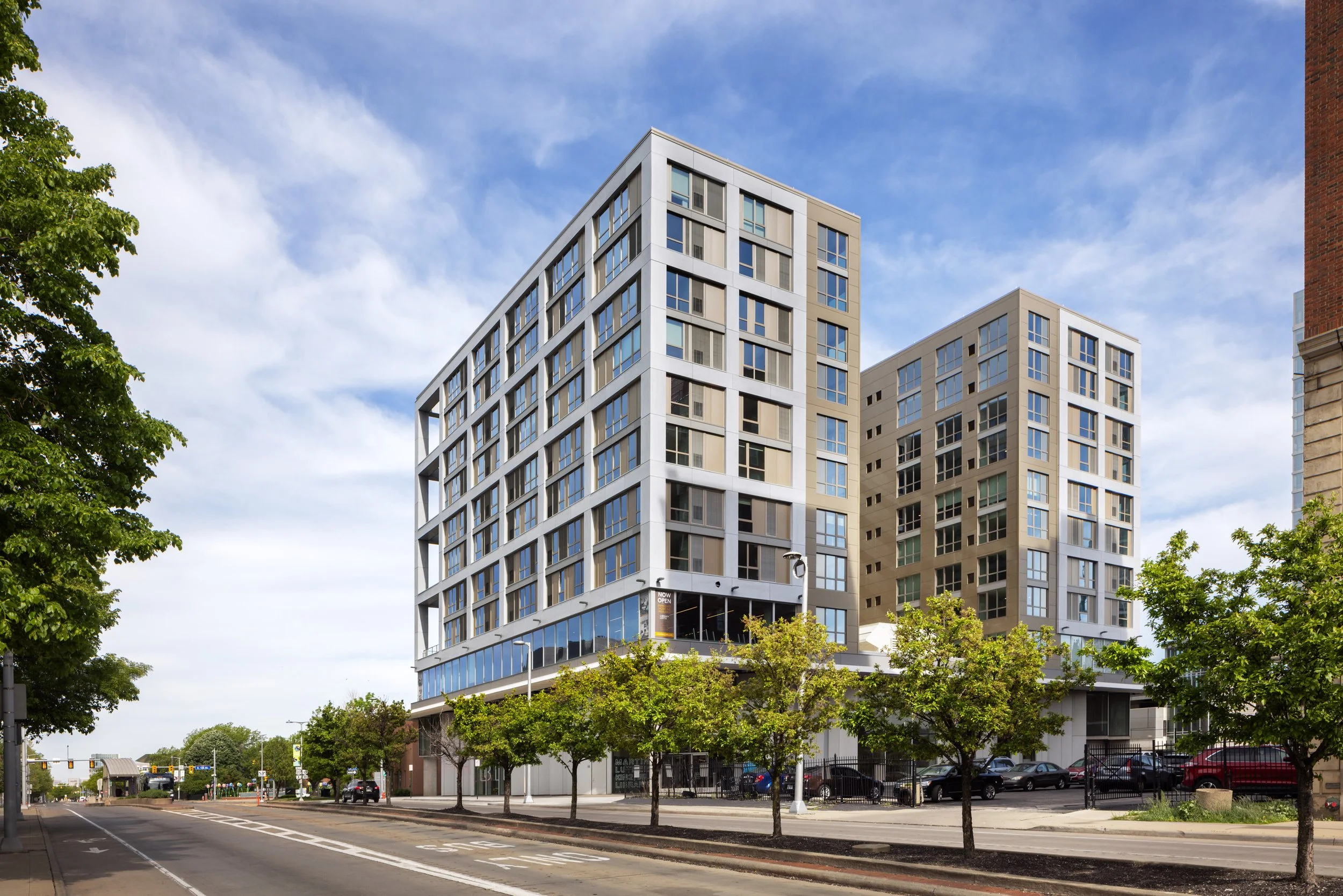
Designed by Bialosky and developed in partnership with NRP Group, Midwest Development Partners, and Cleveland Public Library. The Library Lofts bring together residential living, public infrastructure, and institutional proximity into a single development.
From a photography perspective, the goal wasn’t just to capture the building it was to interpret how that vision shows up in real life. How the architecture supports density, how it connects to the Euclid Corridor, and how it contributes to the larger energy of University Circle.
A Cleveland Approach to Mixed-Use Architecture
What makes this project work is the alignment between design and development.
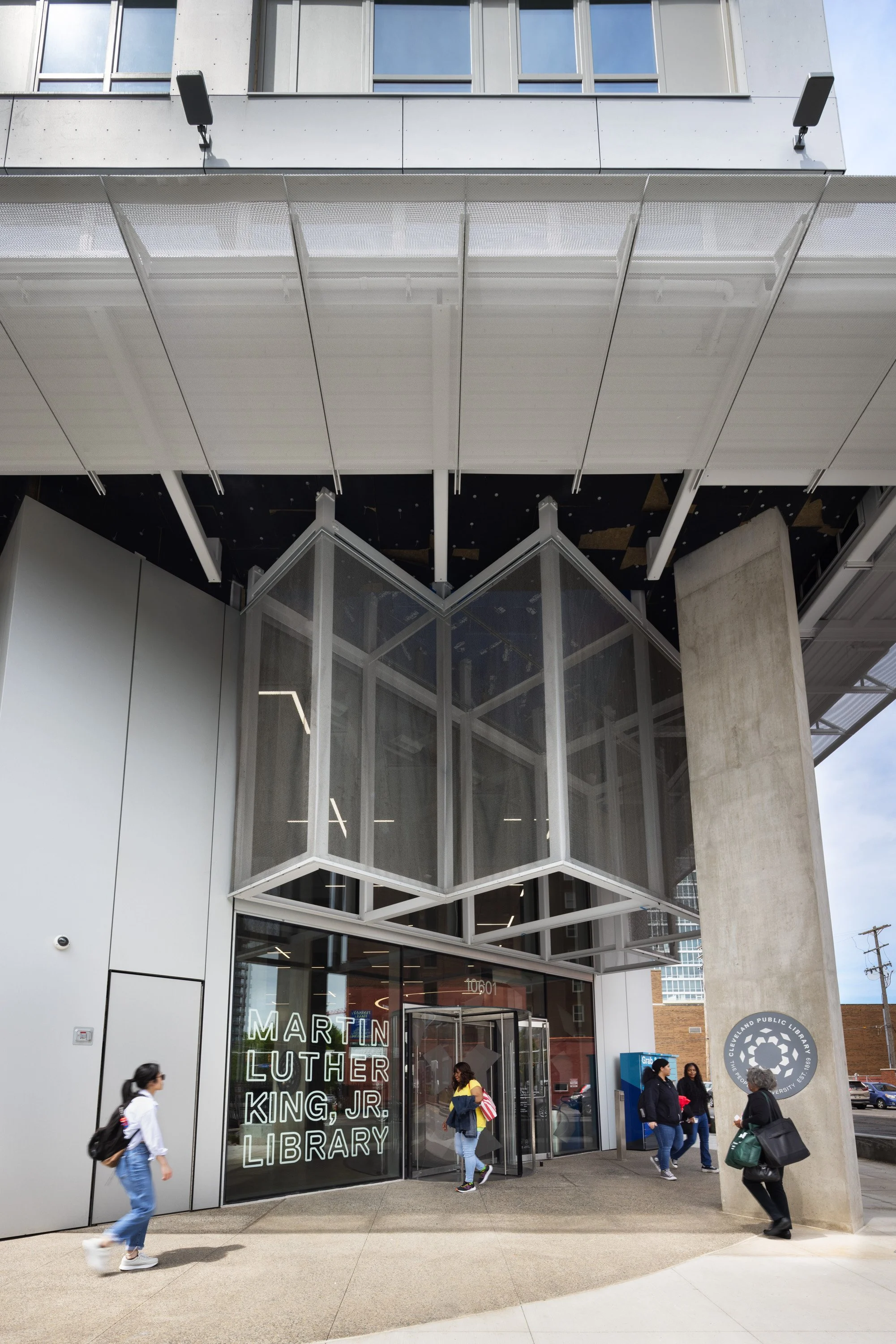
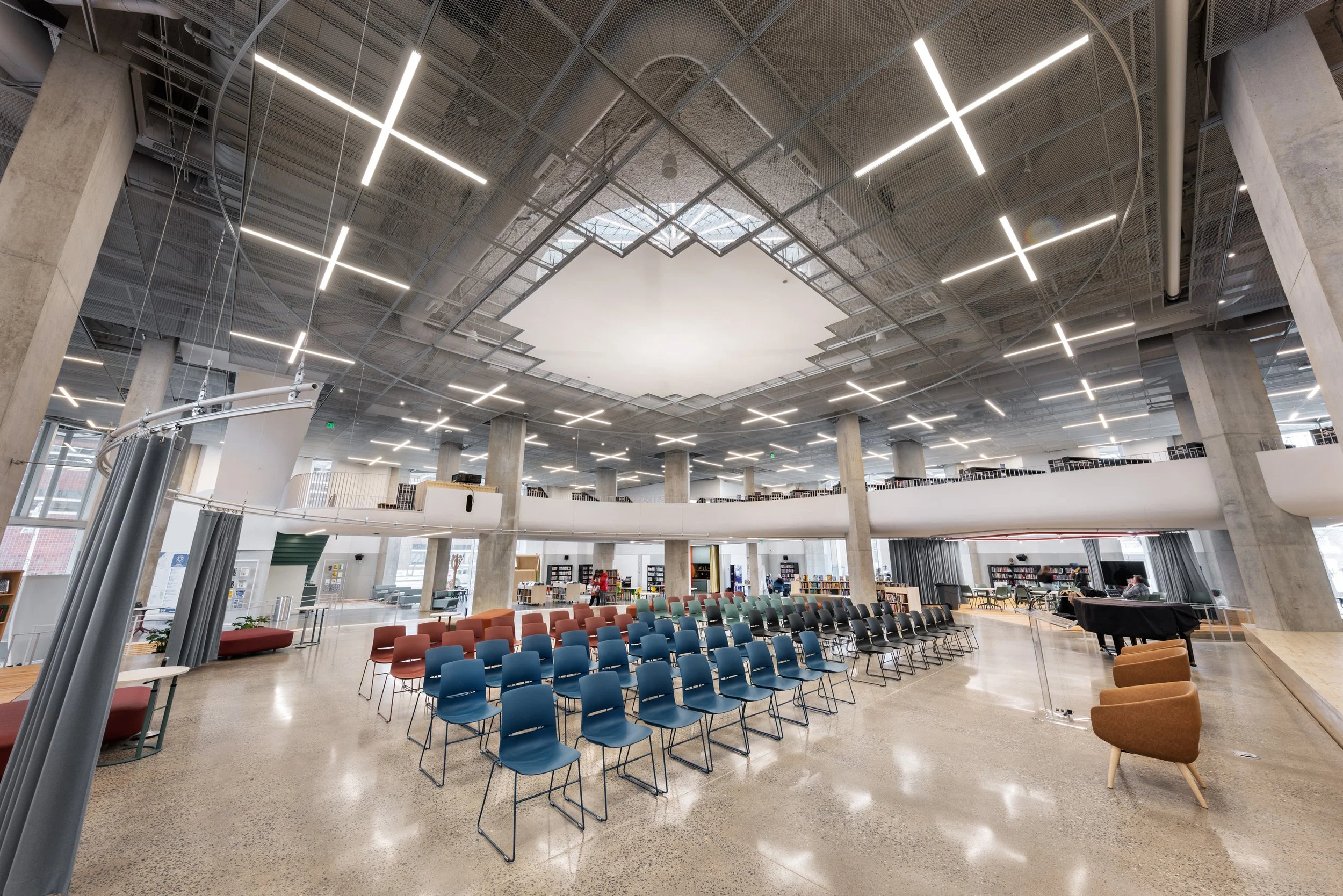
Bialosky’s approach creates a building that feels intentional at the street level through the integration of the Cleveland Public Library, while the development strategy brings residential density to an area anchored by major institutions such as the Cleveland Clinic, University Hospitals, and Case Western Reserve University.
That combination is what defines this part of Cleveland right now.
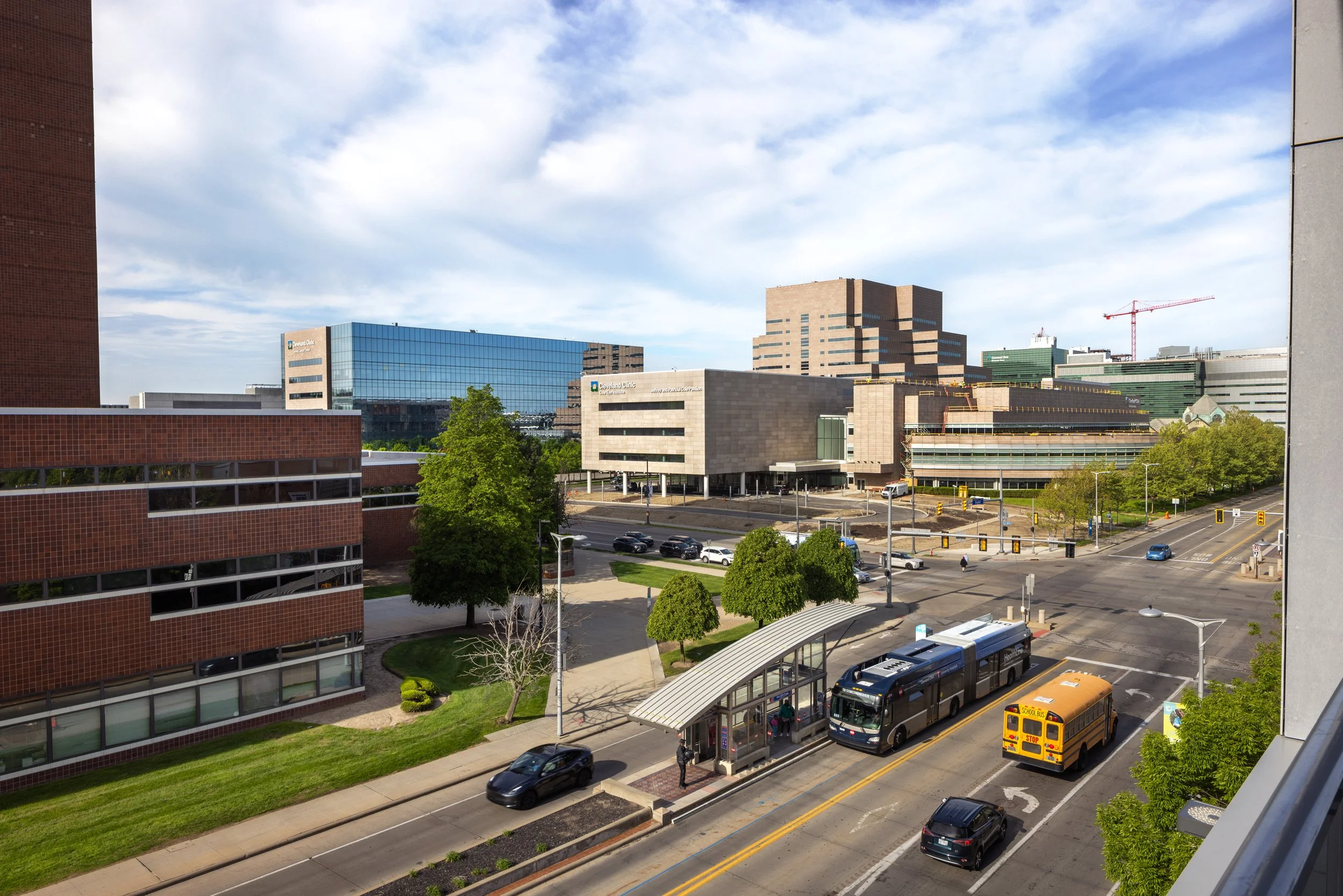
From a photography standpoint, that meant the building couldn’t be isolated. The surrounding movement, buses, traffic, and people needed to be part of the visual narrative because that’s how the project was designed to function.
A Different Kind of Residential Experience
One of the things Bialosky does well here is restraint.
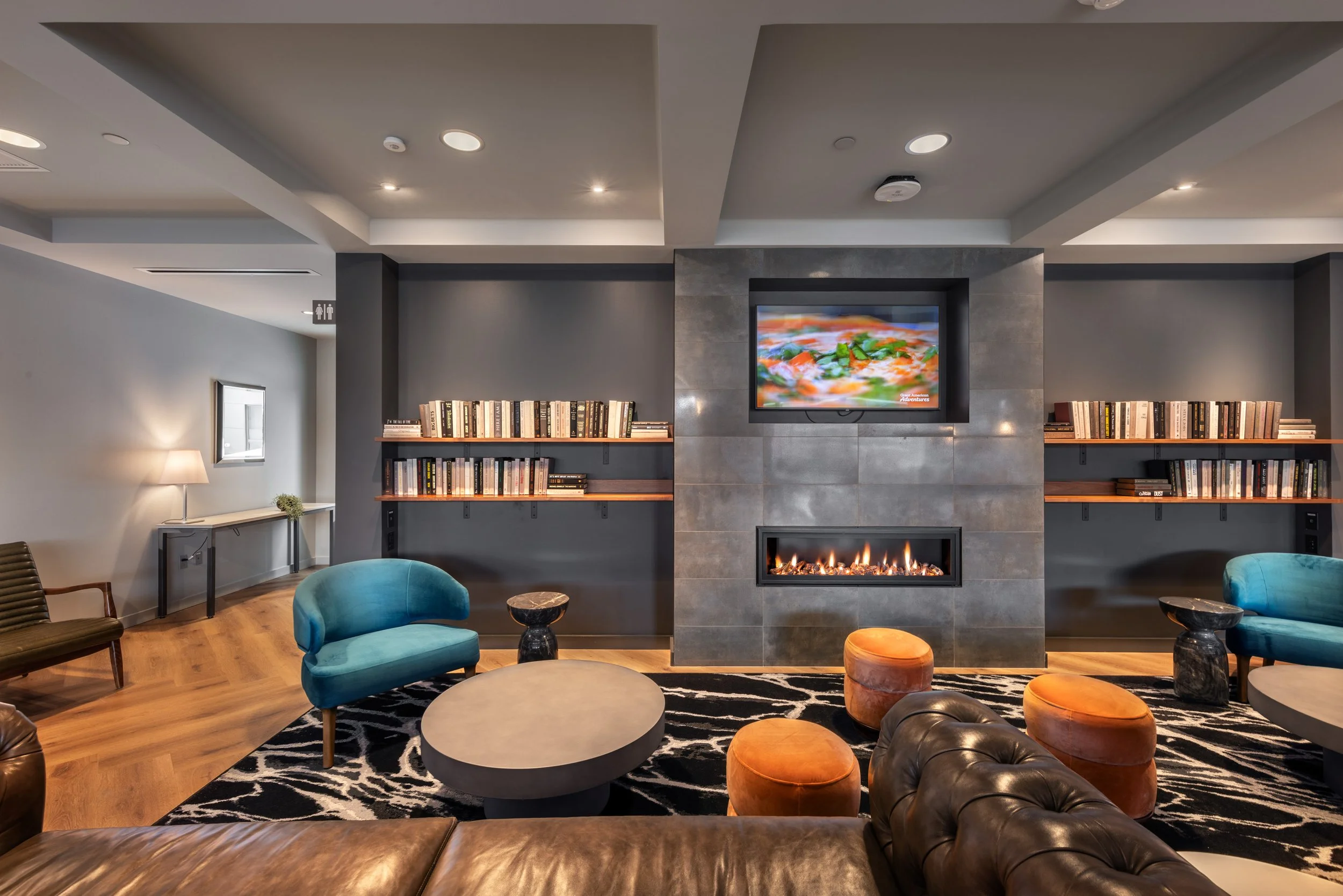
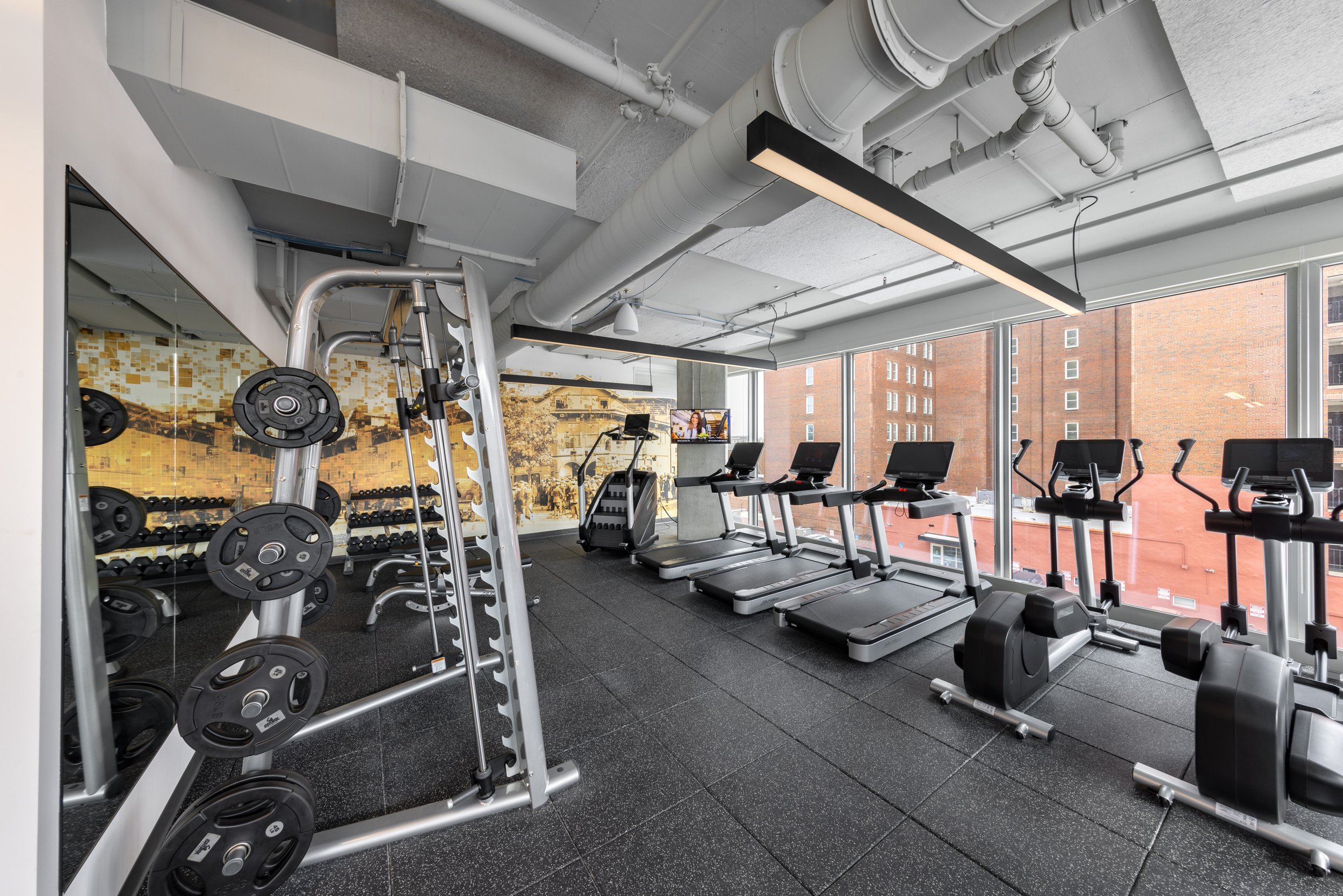
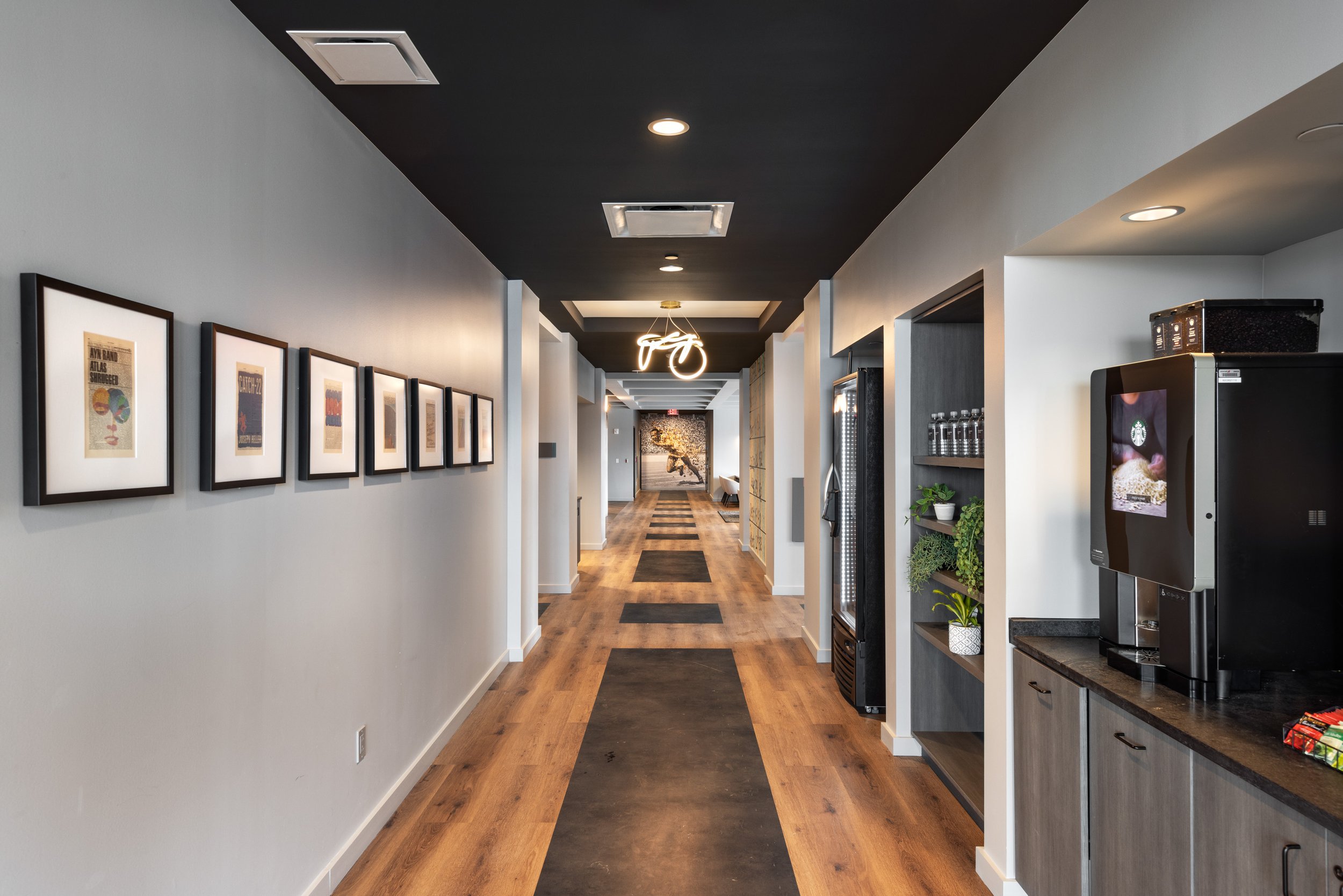
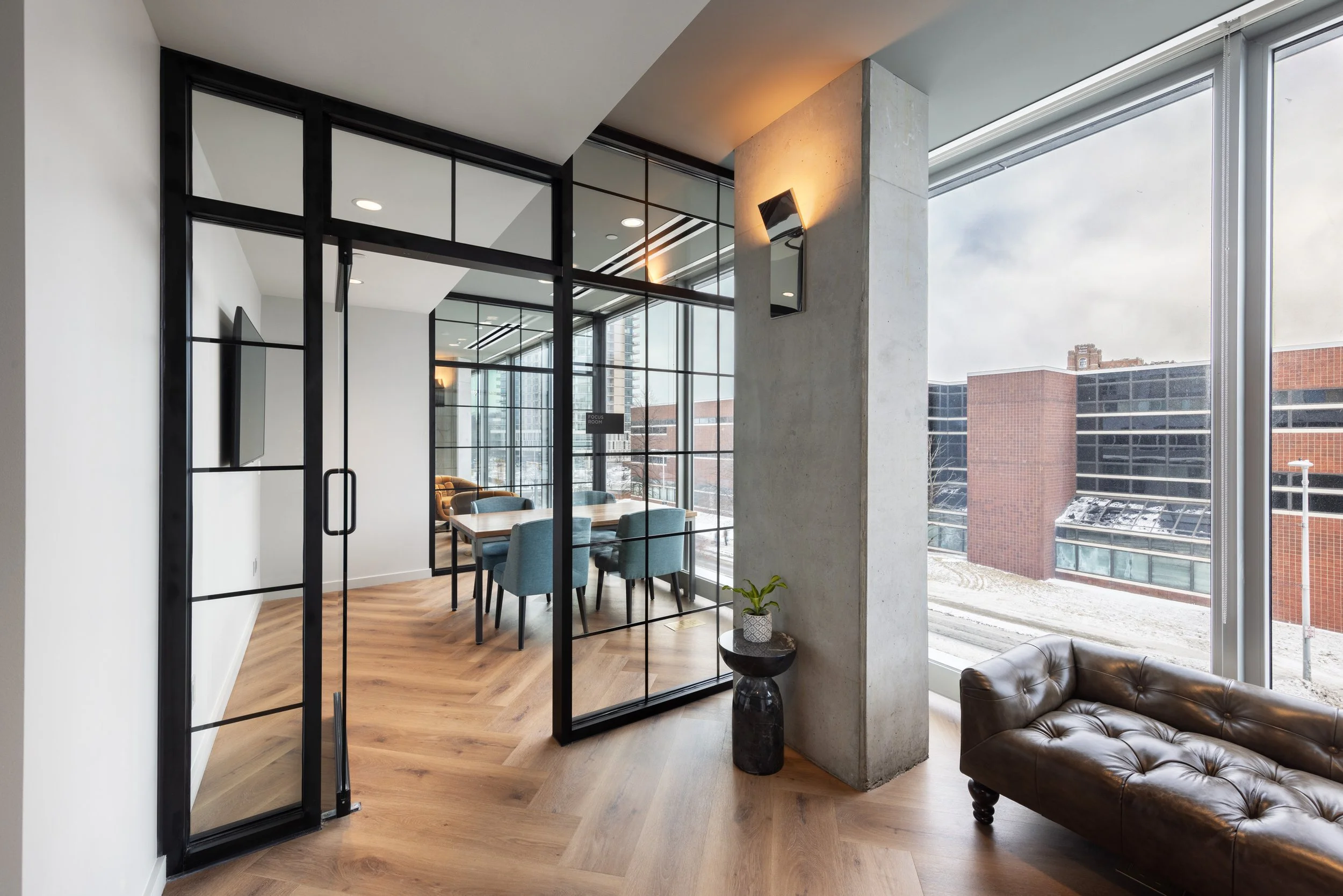
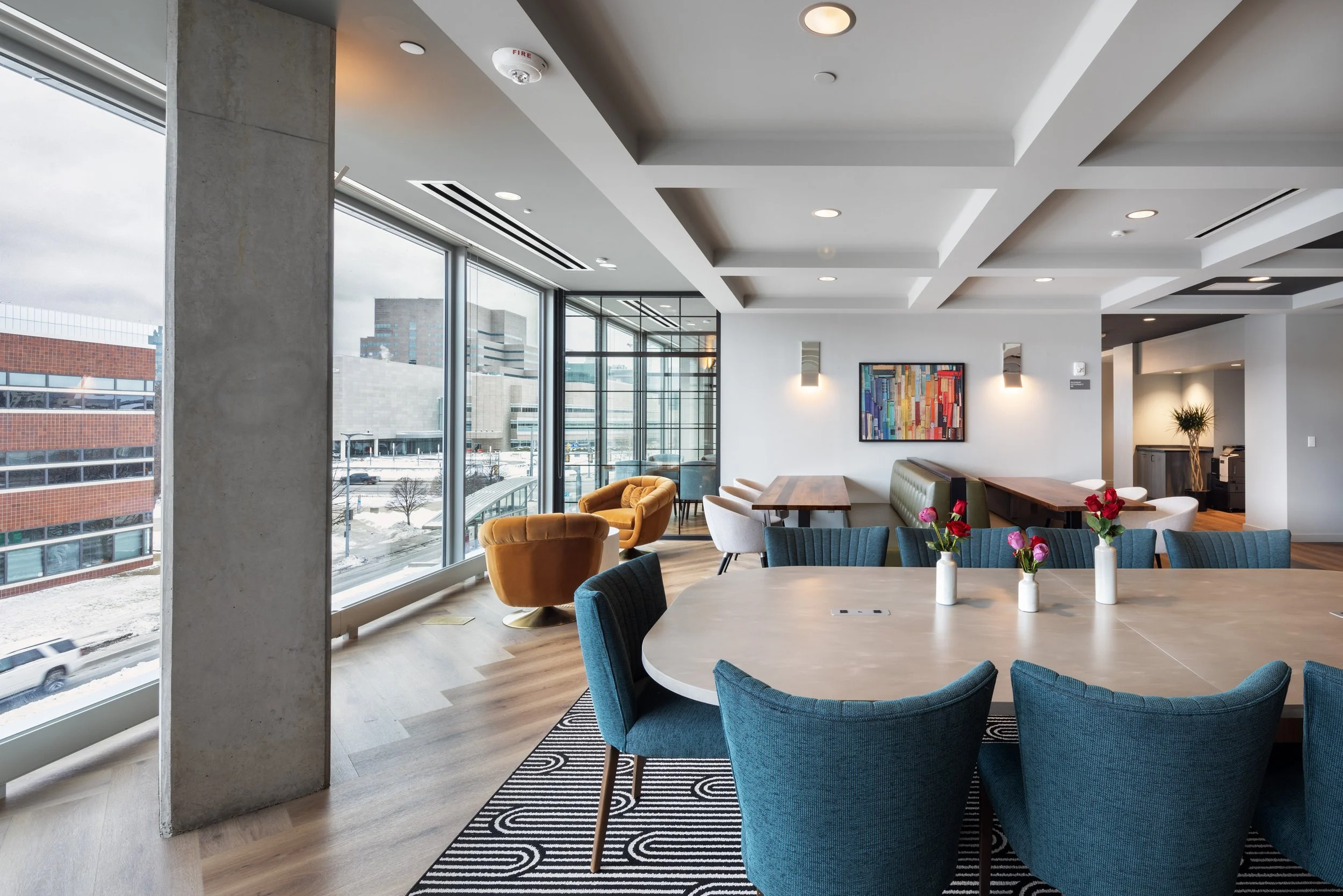
The spaces aren’t overdesigned, but they’re intentional. The amenity level feels more like a hospitality environment than a typical apartment building, with open gathering areas and shared spaces that feel usable rather than staged.
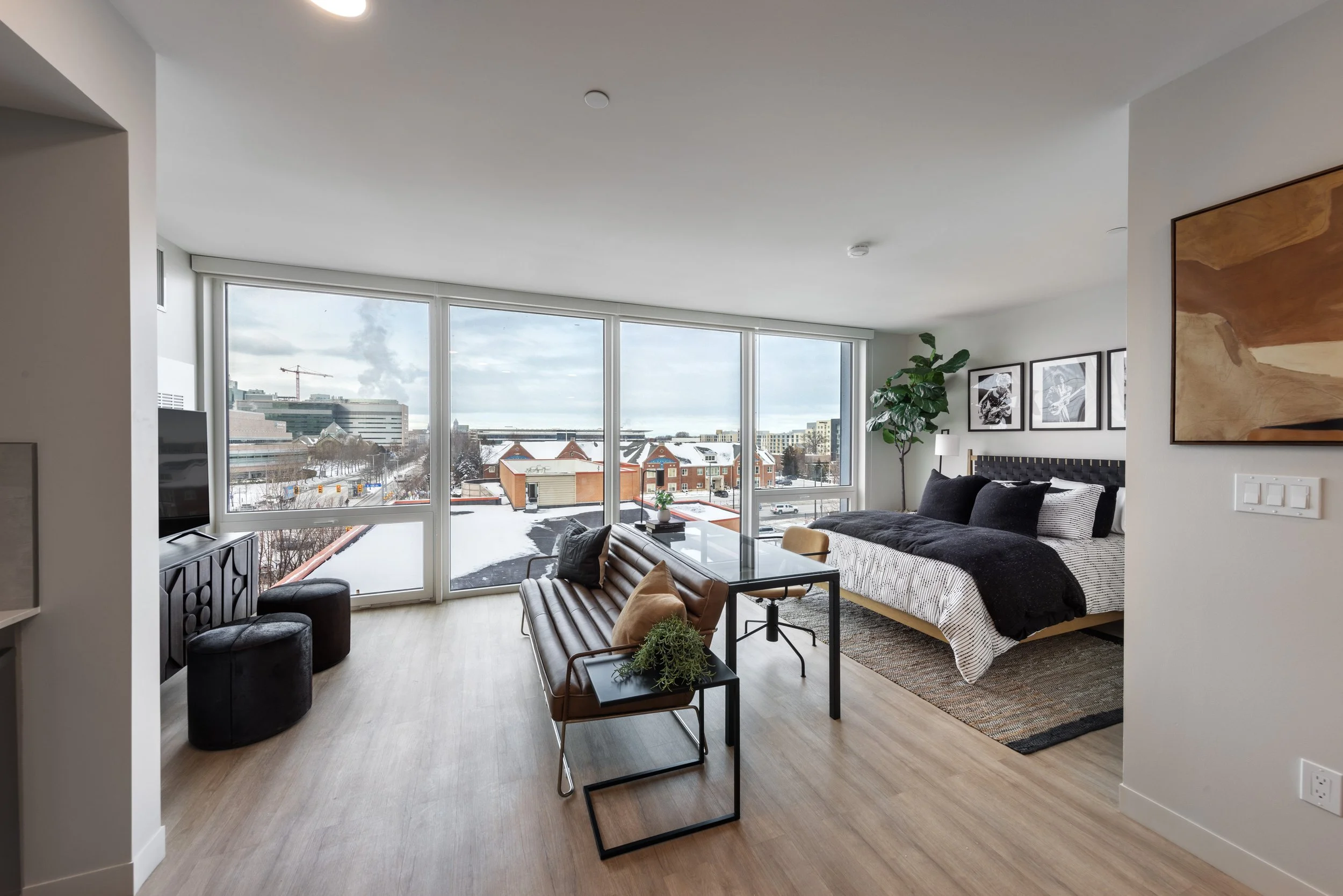
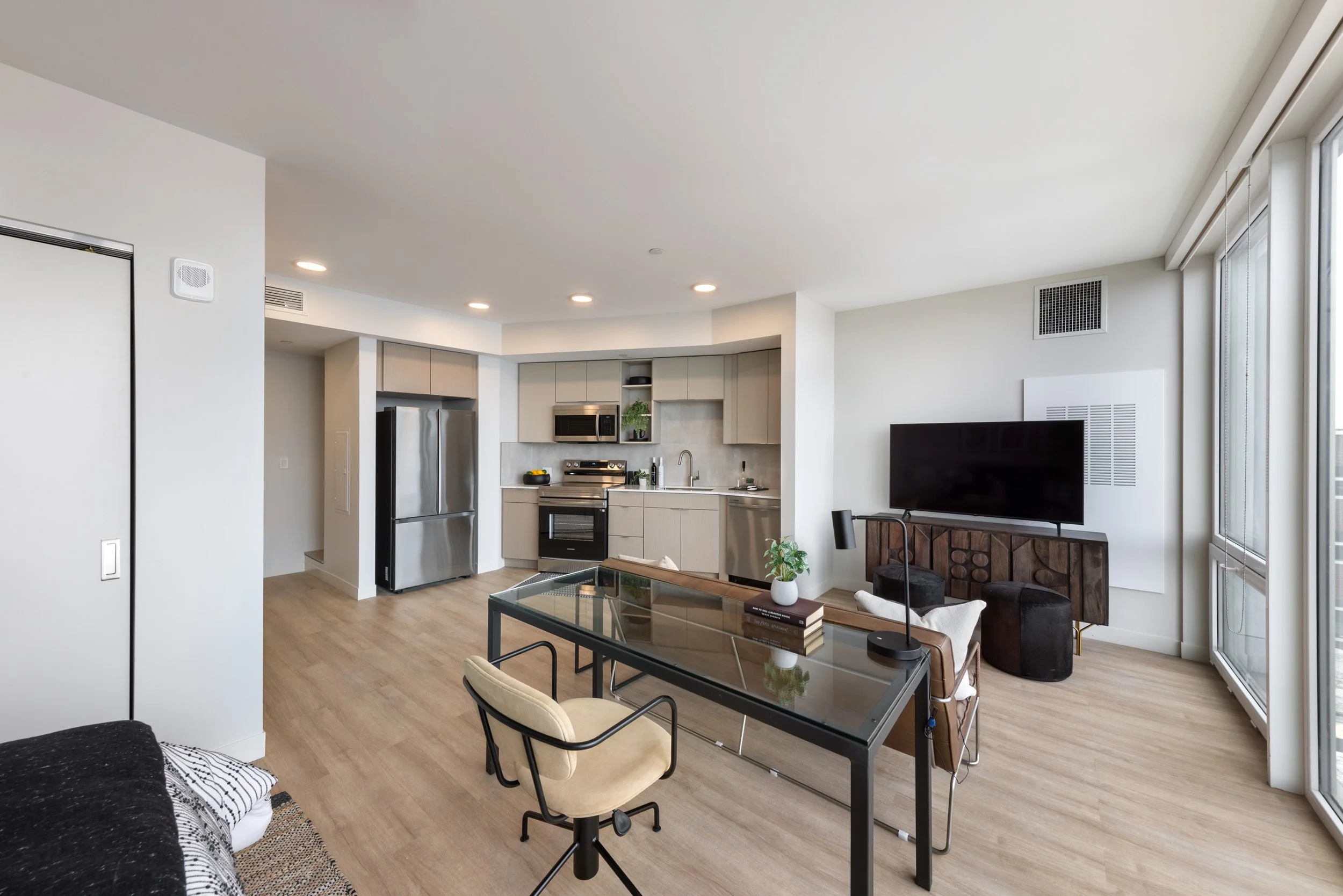
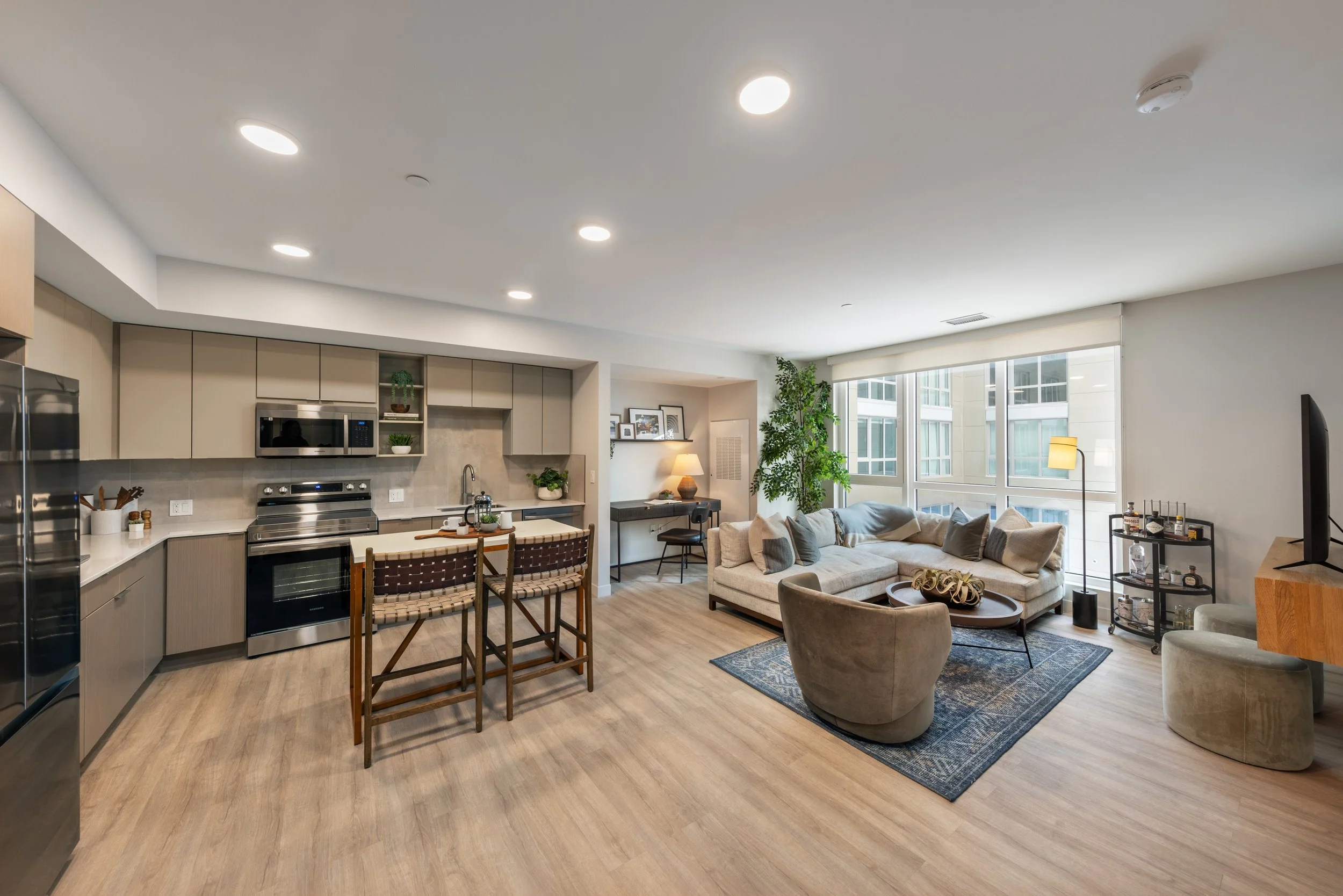
From the development side, there’s also a clear focus on creating value without excess. The units are efficient yet don’t feel constrained—walk-in closets, clean finishes, and natural light create a sense of comfort that reflects how people actually live in the space.
There’s also a strong layer of identity through artwork and wayfinding. That attention to detail adds personality without increasing costs, which you see in well-executed Cleveland projects.
Photographic Approach: Architecture Within Its Environment
The photography needed to reflect both sides of the project, the architectural intent, and the development reality.
As an architectural photographer in Cleveland, a lot of the work is about context. Buildings here are often defined by their surroundings, and in this case, that was central to the story.
Key priorities included:
Capturing views of the Cleveland Clinic from within the apartments
Framing the building along the Euclid Corridor to reflect transit and movement
Including buses, cars, and pedestrian activity as part of the composition
Maintaining clean, balanced interiors that still connect visually to the exterior environment
The goal wasn’t to isolate the architecture it was to show how it operates as part of a larger system.
Balanced Light, Timing, and Real Conditions
The project presented a mix of interior warmth and exterior winter conditions.
Rather than forcing idealized lighting, the approach was to work with what the building naturally offered, balancing daylight with interior exposure to maintain depth and material clarity.
Exterior images required patience. Clean sidewalks, controlled foregrounds, and the right timing of traffic all played a role in achieving compositions that felt intentional without being staged.
Challenges and Solutions
Multi-Season Shoots Are Part of Architectural Photography in Cleveland
The project was photographed in winter and in the spring to account for Cleveland’s seasonal conditions. Exterior images were captured in the spring, carefully timed to ensure clean sidewalks and controlled foregrounds, while interior photography was completed separately to maintain consistency in light, tone, and overall presentation.
Splitting the shoot allowed the architecture to be represented at its best, balancing real conditions with a more refined, cohesive visual outcome that aligns with how the project is experienced across seasons.
Capturing Human Activity
The library entrance needed to feel active but not chaotic. Multiple exposures were used—eight separate captures of people composited into a single image to create a natural sense of movement.
Transit Timing
Capturing buses along Euclid required working within a timing loop. Once the pattern was clear, it became about waiting for the alignment, position, traffic, and light to work together.
Collaboration on Site
This project also benefited from having the right people involved during the shoot.
Working with the client team on-site created alignment around what mattered from key views to how the building would be used for marketing and leasing. That collaboration allows the photography to function as part of the broader architectural and development process, rather than something that happens after the fact.
Conclusion: Architectural Photography as Contextual Storytelling
Projects like Library Lofts come with constraints—weather, timing, movement, and the need to represent both architecture and environment accurately.
This shoot required working across seasons, separating interiors and exteriors, waiting for the right conditions, and building moments that couldn’t happen all at once. From compositing people at the entrance to timing buses along Euclid, every image was a result of patience and control rather than staging.
That’s a big part of architectural photography, especially in Cleveland. You’re not just documenting a building—you’re solving for how to represent it clearly, honestly, and in a way that reflects how it actually exists in the city.
For projects where architectural intent, context, and usability matter, the work extends beyond documentation. Contact the studio to discuss upcoming work.
In-House Representation: Julia Toke
US & Worldwide
+1 917 690 6000