Multifamily Architectural Photography for Collins Rooftop in Cleveland
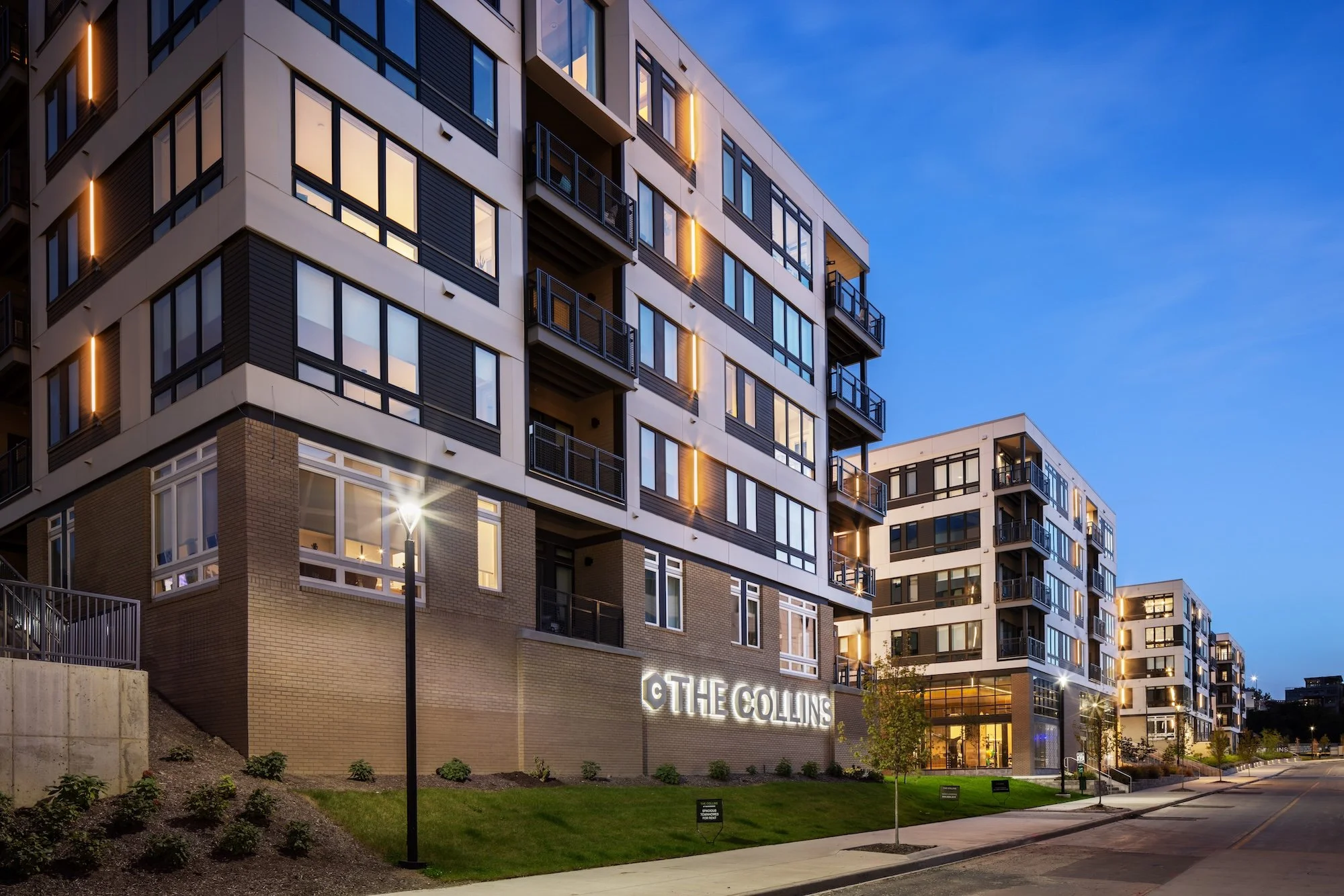
When people hear "multifamily development," they usually picture apartment interiors. Kitchens, living rooms, maybe a lobby if it's particularly well designed. Those spaces are certainly part of the story, but they're rarely the whole story anymore.
The Collins Rooftop development in downtown Cleveland was commissioned by NRP Group, and from the beginning it was clear that this project was about much more than the apartments themselves. The rooftop lounge, pool, shared workspaces, landscaped courtyards, and views across the city were just as important because they represented the way people would actually experience living there. The architecture had been designed to create a community, not simply provide a place to sleep.
That became obvious during my first visit, even though some of the most important spaces weren't ready to photograph. Furniture still hadn't arrived for the rooftop, lighting installations were incomplete, and while you could appreciate the architecture, you couldn't yet appreciate how people would use it. Waiting wasn't a setback. It was simply part of the process.
Projects like this remind me that multifamily architectural photography isn't really about photographing apartments. It's about understanding how an entire community comes together, then creating photographs that help someone else see it the same way.
Understanding the Story the Development Needed to Tell
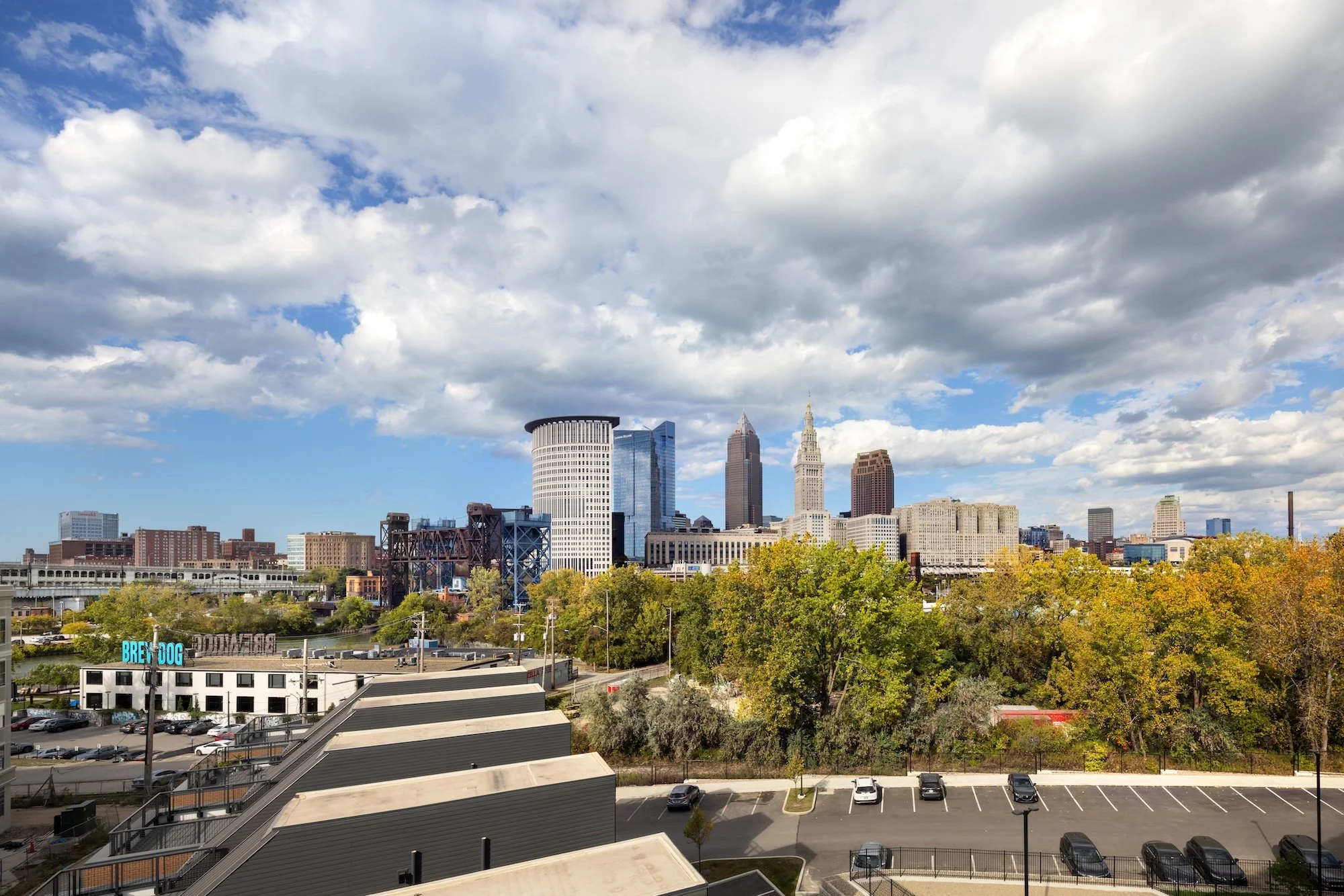
The first time I walked onto the rooftop, I remember stopping almost immediately because of the view. The building sits along the Cuyahoga River, and from that elevation Cleveland opens up in every direction. You can see the city's industrial history alongside newer towers rising downtown, and the skyline becomes part of the architecture whether you intended it to or not.
At that point, though, the rooftop still felt unfinished. The seating hadn't been installed yet. The spaces were there, but they hadn't become places. You could imagine someone sitting outside with a cup of coffee before work or meeting friends for dinner after sunset, but imagination isn't the same thing as experience.
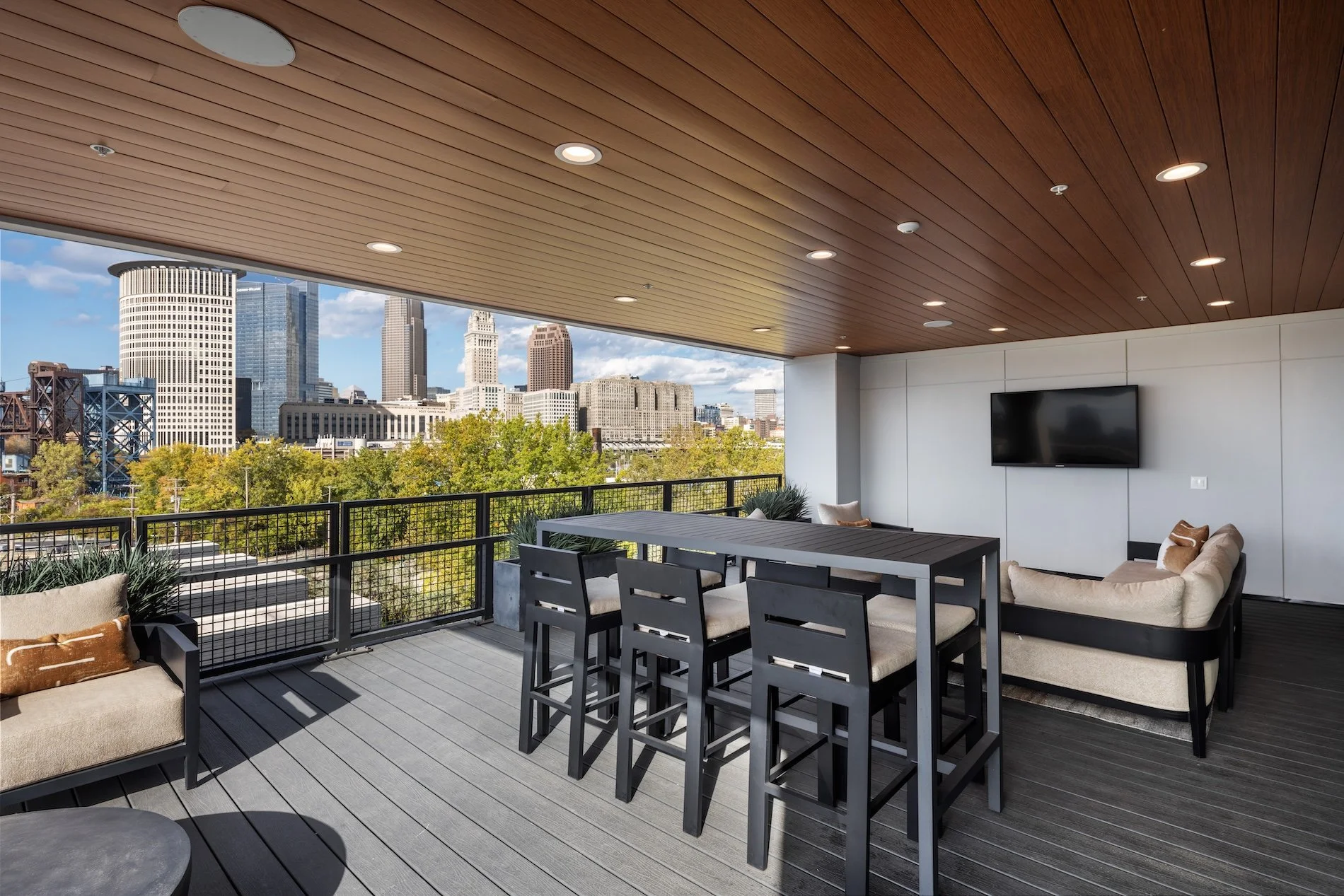
A few months later I came back. The furniture had been installed, the spaces had settled in, and suddenly everything made sense. One side of the rooftop felt relaxed and informal, screened in just enough to create a comfortable place to spend an afternoon. Another area centered around a large communal table that worked equally well for dinner with friends or working remotely.
What struck me most wasn't the furniture itself, it was the people already using it. Several residents were working from that shared table while we photographed the space. We talked for a few minutes, and they mentioned how often they came upstairs because the view helped them think. They laughed about using the Cleveland skyline as the background for video calls because it looked better than sitting inside their apartments all day. That's when you know the design is working.
Multifamily architectural photography starts with understanding how people actually use a building. Once you know that, the camera has something much more interesting to say.
Photographing a Community Rather Than Individual Spaces
Waiting Until the Project Was Ready
People sometimes assume architectural photography happens the moment construction wraps up. In reality, every project has its own timeline.
In the Midwest it's common for exterior construction to finish before interior amenity spaces are completely furnished. You learn pretty quickly that there's no advantage to rushing. If a client tells me they'd rather wait until everything is finished, I'm happy to come back because the photographs are going to be stronger.
That's exactly what happened here. When we returned, the rooftop finally felt complete. The furnishings softened the architecture, the materials worked together the way the designers intended, and every space looked ready to be used instead of waiting for someone to arrive.
Those details don't seem dramatic while you're standing there. They become obvious once you compare the photographs.
Working With Cleveland's Light
The weather ended up making as many decisions as we did. I keep the entire shot list in my head while I'm working because the light is constantly changing. You might have planned to photograph one building at nine o'clock, but then the clouds move in somewhere else and suddenly another composition becomes much stronger.
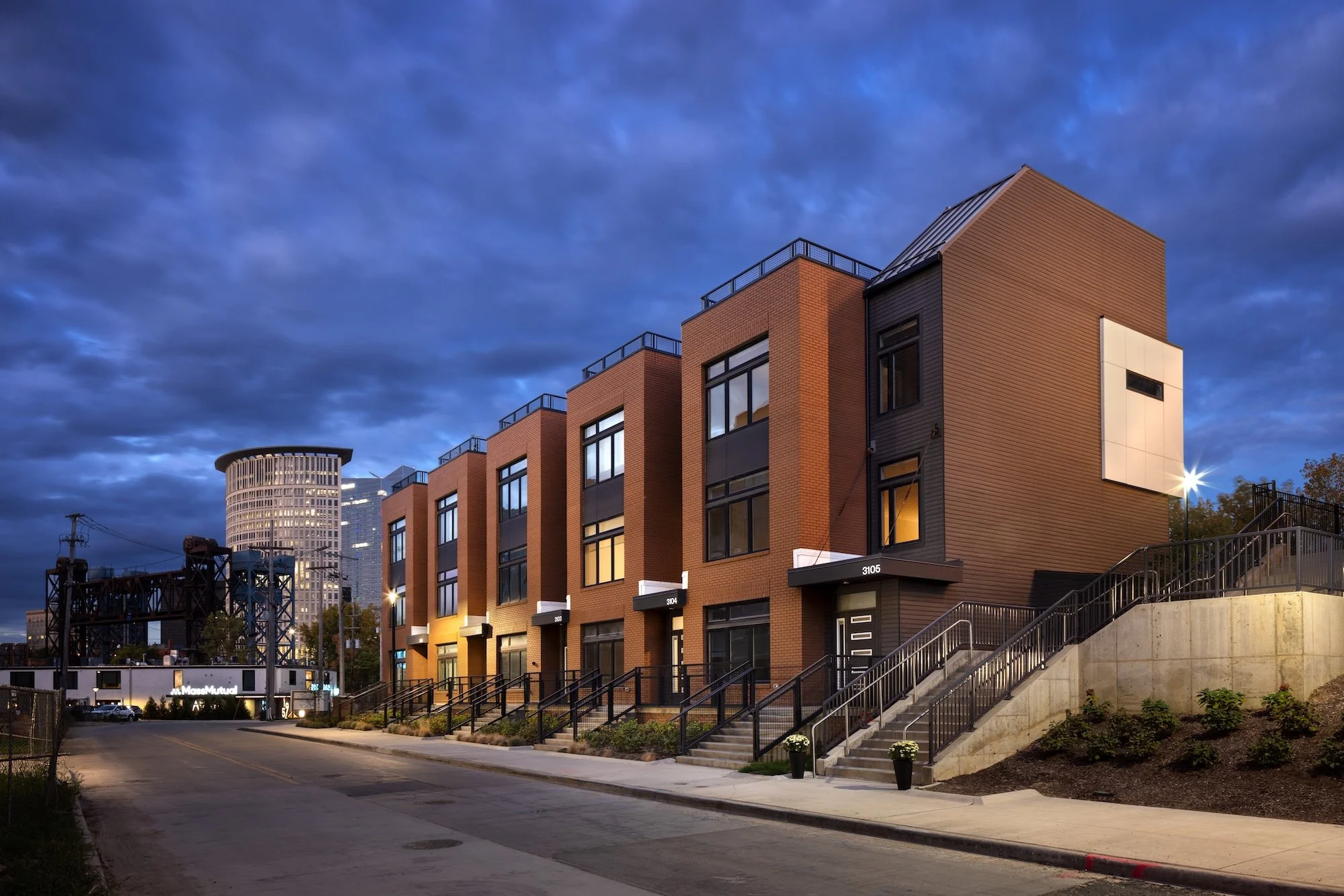
That happened with the townhouses along the bridge. I photographed them early in the morning because the sun was where I wanted it, but the sky was completely empty. There wasn't anything technically wrong with the images; they just didn't have much life to them.
A few hours later, Lake Erie did what Lake Erie often does. Clouds rolled in that looked like someone had scattered popcorn across the sky. The sunlight was still in a good position, but now there was texture overhead, so I walked back and photographed the entire sequence again. Those are the kinds of decisions nobody notices when they look at the finished work, but they're often the difference between a photograph that's simply accurate and one that people remember.
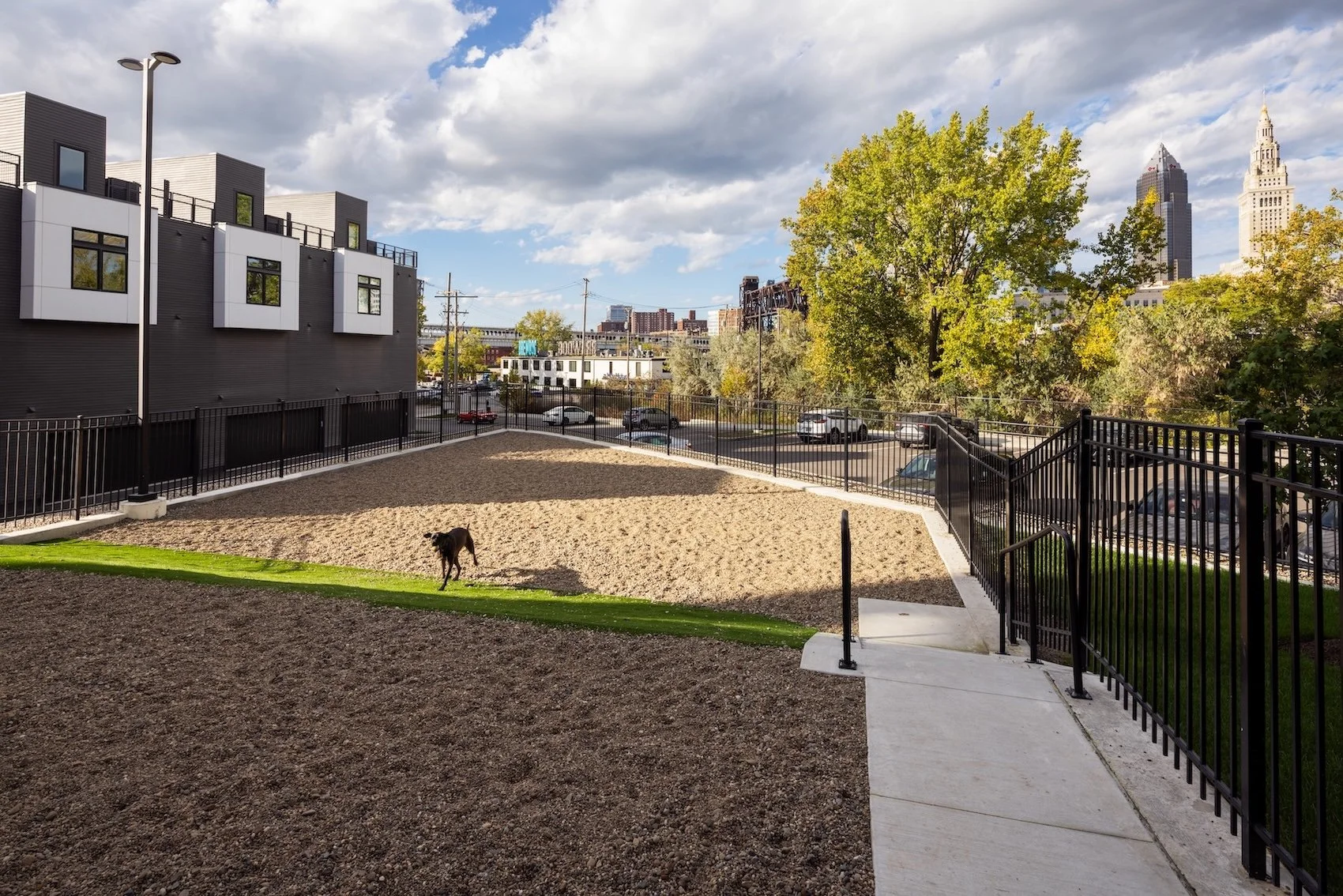
Later that evening we stayed long enough to photograph the exterior at magic hour. The landscaping had filled in since the first visit, the dog park was finished, and the building had settled into its surroundings. Everything came together at about the same time.
Creating Nearly 70 Images Across Four City Blocks
This wasn't a project where you parked the camera in one location and worked your way through a building.
Collins stretches across nearly four city blocks, and over three days we photographed everything from apartment interiors and rooftop amenities to fitness spaces, murals, landscaped courtyards, streetscapes, and long exterior views that helped establish the development within downtown Cleveland.
By the end of the shoot NRP received around seventy finished images. The number isn't particularly important. What matters is that they all feel like they belong together.
Whether someone is looking at a close-up of a material inside the gym or a wide view across the rooftop toward the skyline, the photographs should feel like they're describing the same place.
Using Photography to Connect Spaces
When I'm photographing a project like this, I'm rarely thinking about individual rooms. I'm thinking about relationships.
How does someone move from the lobby to the courtyard? What do they see when they walk onto the rooftop? How does one amenity naturally lead to another? Those relationships are what turn a collection of spaces into a community.
Layering Space Through Composition
One of the ways I do that is through layering. Foreground, midground, background—it's something I think about almost automatically now.
Sometimes, I'll photograph from the corner because it helps separate one space from the next. Other times a centered, one-point perspective cleans everything up and allows the architecture to speak for itself.
Natural light becomes another layer in that composition. It defines edges, separates materials, and gives depth to spaces that might otherwise feel flat.
The rooftop was a good example. Rather than isolating the seating area or the dining table, I wanted viewers to understand how the entire rooftop functioned together. Once you can see those relationships, the architecture begins telling its own story.
Connecting the Building to Cleveland
One thing I appreciated about Collins Rooftop was that it never tried to turn its back on the city. The views are part of the experience.
Looking across the river you see Cleveland's industrial past sitting comfortably beside its future. Bridges, rail lines, warehouses, newer glass towers like the Sherwin-Williams headquarters, and familiar landmarks such as the West Side Market all become part of daily life for residents. NRP wanted those connections to be visible because they help explain why someone would choose to live there.
I also photographed the skyline on its own, knowing their designers might want those images later for the website or marketing materials. Sometimes a photograph isn't tied to one particular space. It becomes part of the larger visual language of the project.
Showing Amenities as Part of Everyday Life
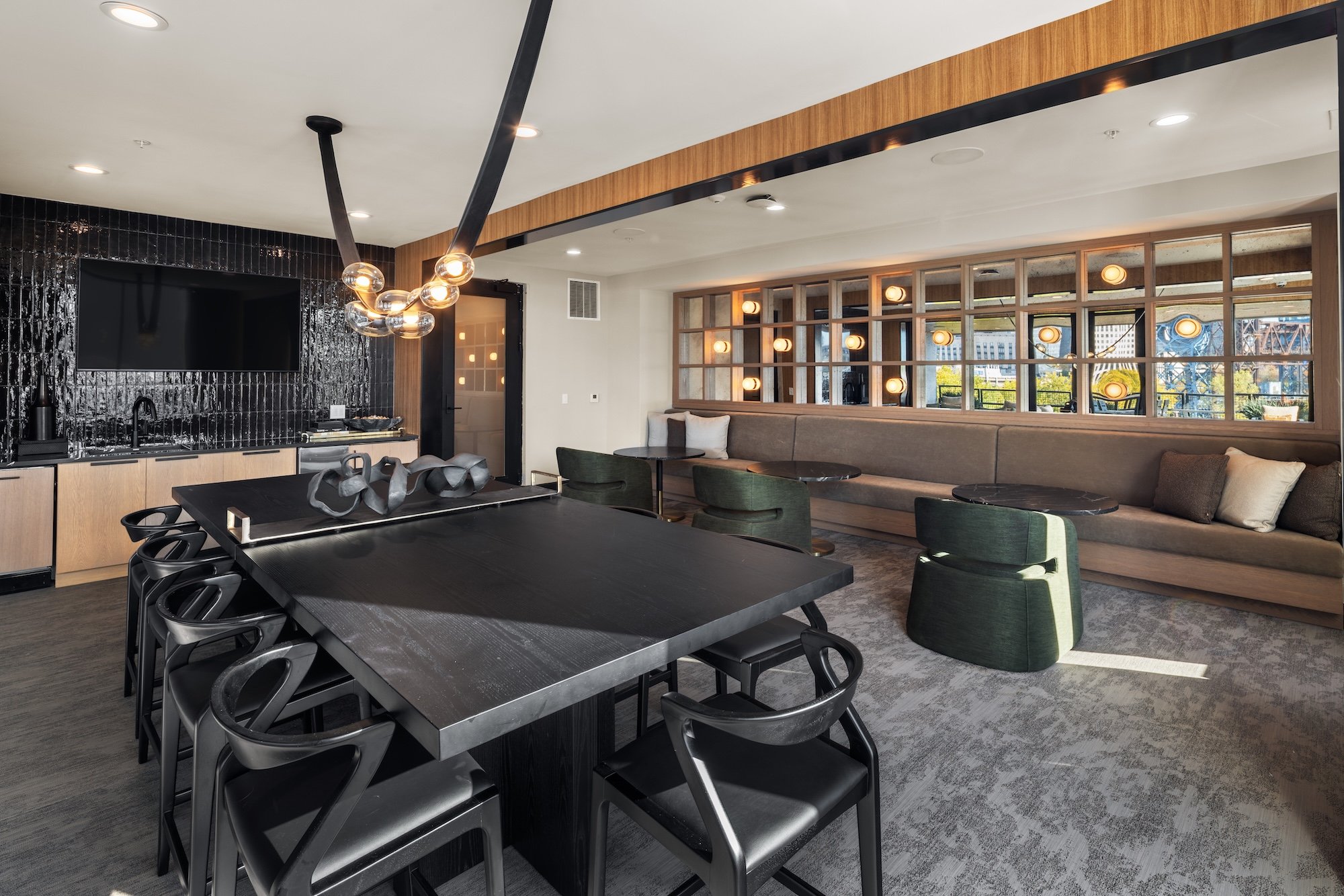
One thing I try to avoid is making amenities feel like isolated destinations. The breakfast bar isn't just a breakfast bar. It belongs to the pool.
The work nooks aren't simply places to sit with a laptop. They're connected to the outdoor gardens, the circulation paths, and eventually the rooftop itself.
When someone looks through the finished photographs, I want them to understand how those experiences connect without having to think about it consciously. That's usually when the photography starts feeling natural.
Why Multifamily Architectural Photography Is About Lifestyle
Developers invest a tremendous amount of thought into how people will live inside a community. The architecture matters, of course, but so do the fabrics, the lighting, the landscaping, the artwork, the way one material transitions into another, and how the public spaces encourage people to spend time together.
Those decisions rarely announce themselves, yet they shape someone's experience every single day. That's what I'm looking for when I photograph a multifamily development.
Apartment amenity photography has become a much larger part of that conversation because amenities often influence where people choose to live. A rooftop lounge, coworking area, fitness center, or quiet outdoor garden tells prospective residents something about the community before they've stepped inside an apartment.
It's also where architectural photography begins to separate itself from real estate photography. A broker may need fifty photographs in an afternoon to show available units. My clients are usually asking a different question: How do we communicate everything that went into designing this place?
Sometimes that means moving a chair six inches. Sometimes it means waiting for clouds. Sometimes it means using a leaf blower to put the mulch back where it belongs before making the exposure. Those details probably disappear in the finished image. I'm perfectly happy with that.
Results

Helping the Client Market the Community
Over three days, NRP received a library of roughly seventy photographs covering the full development, from broad exterior views stretching across four city blocks to carefully styled apartment interiors and details inside the fitness center.
The images have been used throughout the property's marketing, giving the client flexibility to tell different stories depending on the audience. Some focus on the apartments, others on amenities, and others on the relationship between the development and downtown Cleveland.
That flexibility was part of the goal from the beginning.
Showing More Than Apartments
One of the nicest compliments a multifamily project can receive is when people start talking about living there instead of talking about the architecture. That's what these photographs were meant to encourage.
The apartments are warm and inviting, but they're only one piece of the experience. The rooftop, shared workspaces, outdoor gathering areas, landscaped paths, and skyline views all help complete the picture.
Together they explain why someone might choose this community over another.
The Value of Returning for the Right Photograph
Looking back, I'm glad we waited. Coming back after the furniture arrived, after the landscaping had matured, after the dog park was finished, and after the weather gave us exactly what we needed made every part of the project stronger.
Architecture isn't created in a single day. There's no reason the photography has to be.
Final Thoughts
Every multifamily development tells two stories. One is about the architecture itself, the drawings, the materials, the construction, and all the decisions that brought the project to completion.
The other story doesn't really begin until people move in. That's the one I'm interested in photographing.
Collins Rooftop reminded me that a successful community isn't defined by a single apartment, rooftop, or amenity. It's defined by how those spaces work together and how people make them part of their everyday lives. When the photography captures those relationships honestly, the images continue doing their job long after the construction crews have packed up.
If you're planning a multifamily, mixed-use, or residential development and want photography that communicates the experience of the community as thoughtfully as the architecture itself, I'd be happy to continue the conversation.
Frequently Asked Questions
What is multifamily architectural photography?
Multifamily architectural photography showcases apartment communities by capturing the architecture, amenities, and overall resident experience. Rather than focusing only on individual units, it tells the story of how the entire community functions and supports everyday living.
Why are apartment amenities important to photograph?
Amenities often influence leasing decisions just as much as apartment layouts. Rooftop lounges, coworking spaces, pools, fitness centers, and outdoor gathering areas help prospective residents understand the lifestyle a community offers beyond the apartment itself.
How does architectural photography help market apartment communities?
Professional architectural photography provides developers and property managers with high-quality imagery for websites, leasing campaigns, social media, presentations, investor communications, and long-term marketing. A cohesive image library helps communicate both the architecture and the experience of living in the community.
What makes architectural photography different from real estate photography?
Architectural photography emphasizes design intent, composition, lighting, materials, and the relationships between spaces. Real estate photography is typically designed to document properties quickly for listings, while architectural photography creates thoughtful images that showcase the architect's vision and the long-term value of the project.
Why is natural light important in architectural photography?
Natural light reveals texture, depth, and atmosphere in ways that artificial lighting often cannot. Photographing a project at the right time of day helps communicate the architect's design intent and creates images that feel authentic to the experience of being in the space.