20 Years Together: Photographing the Evolution of Restaurant Design and Hospitality
Some of the most rewarding projects in my career have come from relationships that keep evolving.
I have been photographing restaurants for the Schulson Collective for roughly 20 years. In that time, the restaurants have changed, the food has evolved, the materials have become more ambitious and the details more refined. My photography has had to evolve right along with them.
That is one of the things I love about restaurant architectural photography. A restaurant is never just a beautiful room. It is architecture, food, lighting, sound, service and people all working together to create an experience. When you photograph the same client over many years, you get to watch that experience become more sophisticated; thus, you have to keep finding new ways to communicate it.
What Can 20 Years of Restaurant Architectural Photography Reveal?
My relationship with these projects goes back to Buddakan in New York City in 2005.
By then, I had already photographed the original Buddakan in Philadelphia and had recently photographed Morimoto.
When I was asked to photograph Buddakan in New York, the chef also wanted a sampling of the food photographed because he did not yet have a food photographer in the city.
What I remember most was the pursuit of perfection.
Dish after dish came out until everything was immaculate. We were encouraged to taste the food because the belief was that once you experienced it, you would understand what made the restaurant special. I still think about the edamame dumplings and crab fried rice.
That attention to detail has never really disappeared from the work.
From Buddakan to Double Knot: A Client Relationship That Kept Evolving
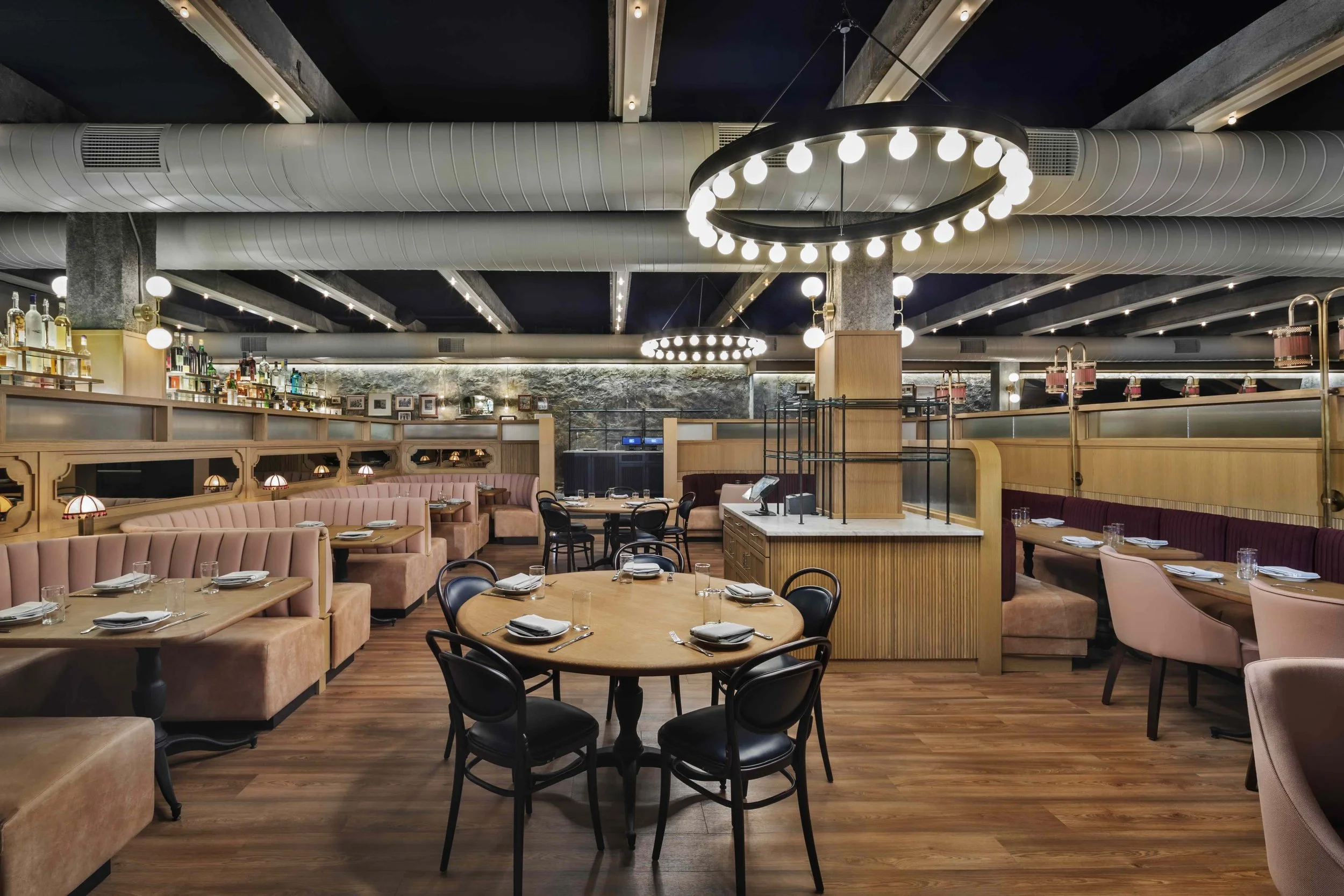
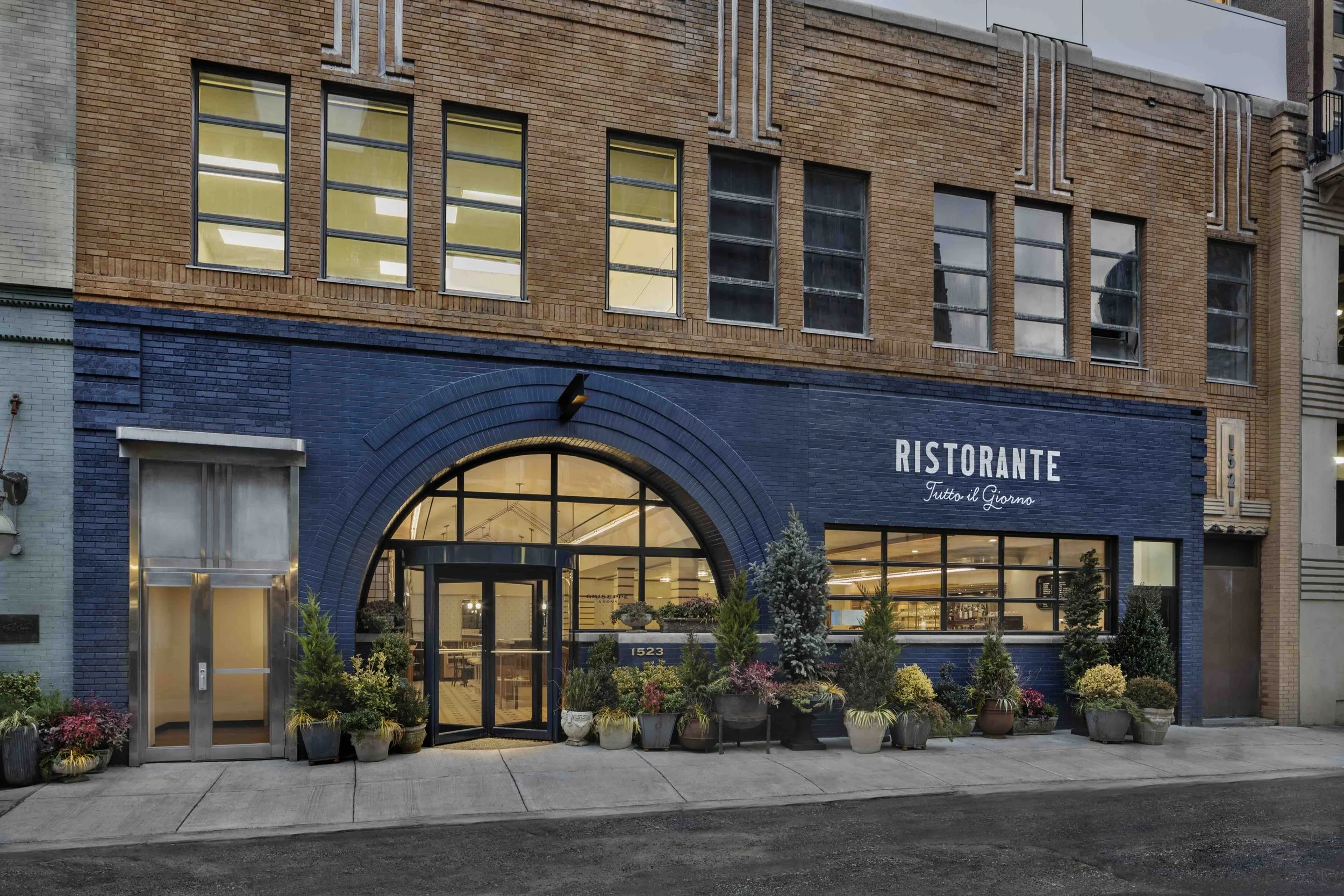
Over the years, I continued photographing Schulson restaurants, including Giuseppe & Sons in Philadelphia shortly before COVID and Double Knot in Philadelphia, New York City and Delray Beach.
Seeing those restaurants across different cities and different moments has been fascinating.
The spaces keep becoming more sophisticated, but they never lose their sense of hospitality. The materials change. The lighting changes. The food evolves. The individual rooms become more considered. But there is always a sense that you are supposed to discover something as you move through the restaurant.
As a photographer, that gives me a lot to work with.
How Does Restaurant Design Shape Photography?
A restaurant can look completely different from one room to the next.
Some spaces are large and theatrical. Others are carved out of basements. Some depend on dramatic lighting, while others are about materials, texture or the relationship between multiple rooms.
A restaurant interior photographer has to understand what makes each space work before deciding how to photograph it.
The goal is not simply to make the room look attractive. The photographs should help someone understand what it feels like to move through the restaurant.
Photographing the Reveal of a Restaurant Space
One of the things I have always appreciated about these projects is that there is often a secret to the design.
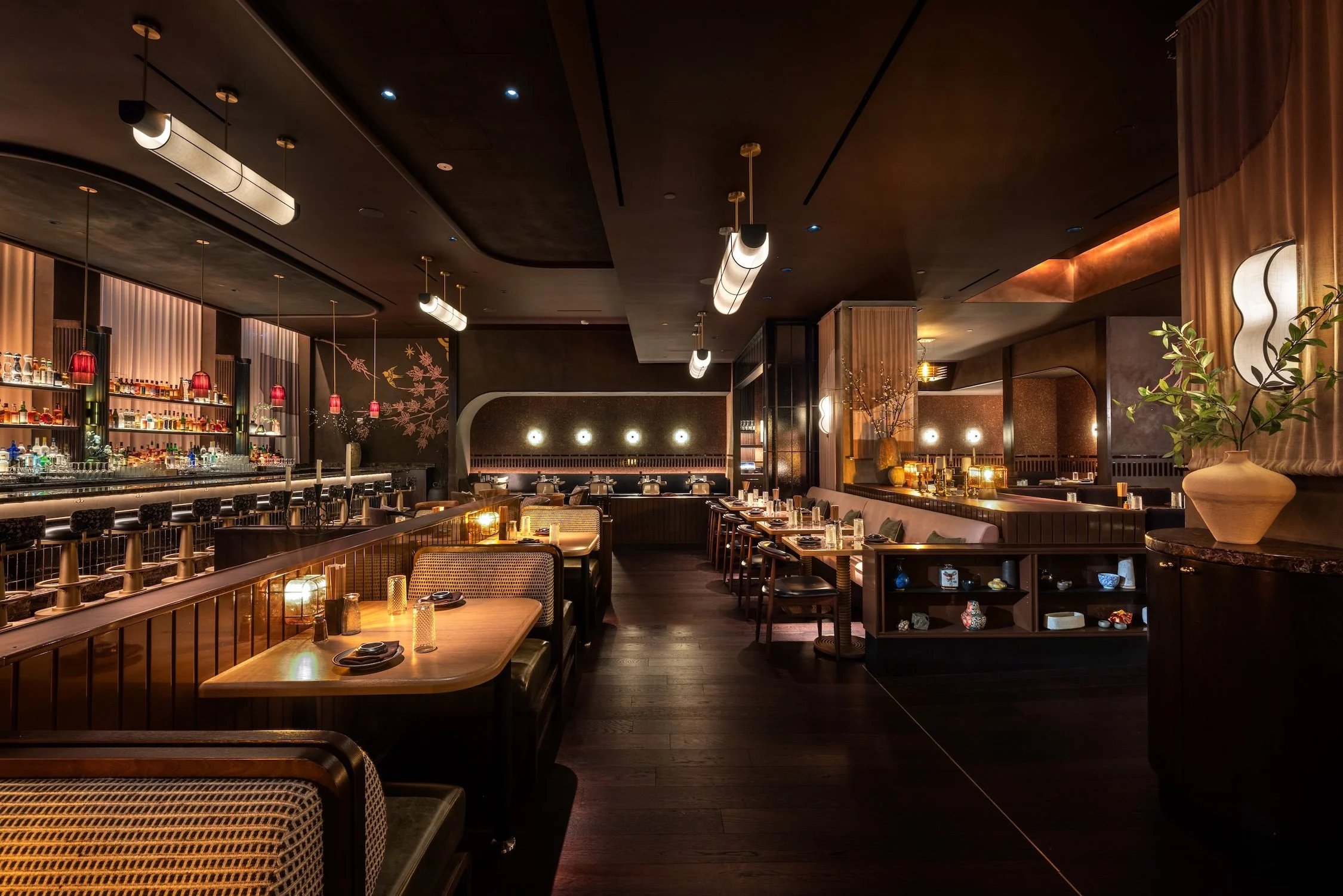
Double Knot in Philadelphia is a great example. The restaurant feels energetic and almost hidden away. The atmosphere can be loud and incredibly social, yet the space was created in a basement, which could have easily felt like a limitation.
Instead, it becomes part of the experience.
That means I cannot necessarily tell the whole story with one wide photograph from the entrance. I have to think about the sequence: what do you see first, what is revealed next and which image helps explain how one space connects to another?
Restaurant architectural photography becomes a visual version of walking through the space.
Materials, Lighting and Details Build the Atmosphere
The more recent projects have pushed that idea even further.
At Double Knot, materials such as yakisugi—the Japanese technique of charring wood—create incredible depth and texture. Details like that are not simply decoration. They contribute to how the restaurant feels.
The interesting part is that the design often leads back to the food, and the food leads back to the design.
The ingredients may become more refined. The preparation becomes more sophisticated. At the same time, every surface, material and lighting decision in the restaurant is being considered with the same level of care.
My job is to make those decisions visible.
Why Should People Appear in Hospitality Architectural Photography?
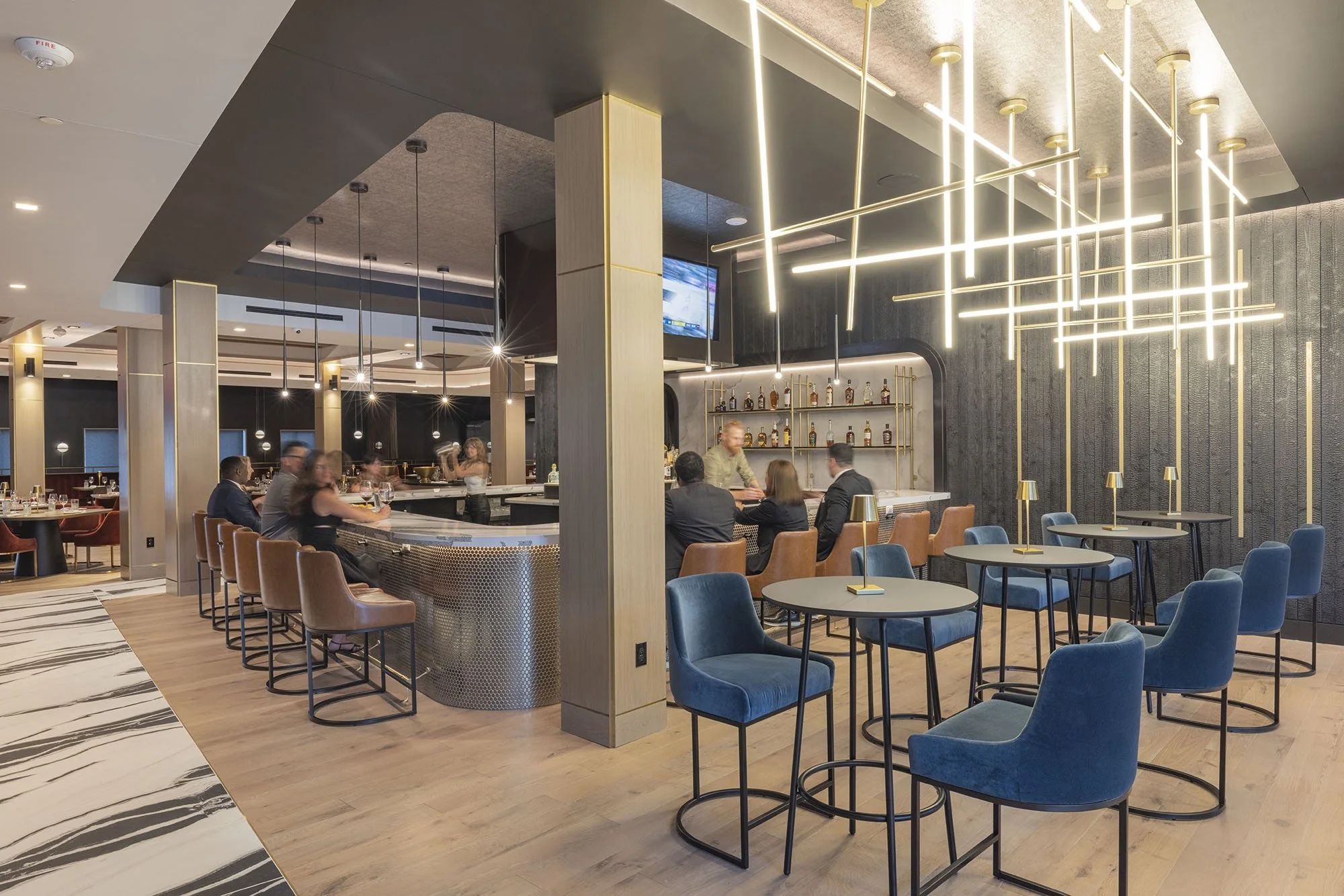
I love a beautifully composed image of an empty room, but restaurants are built for people.
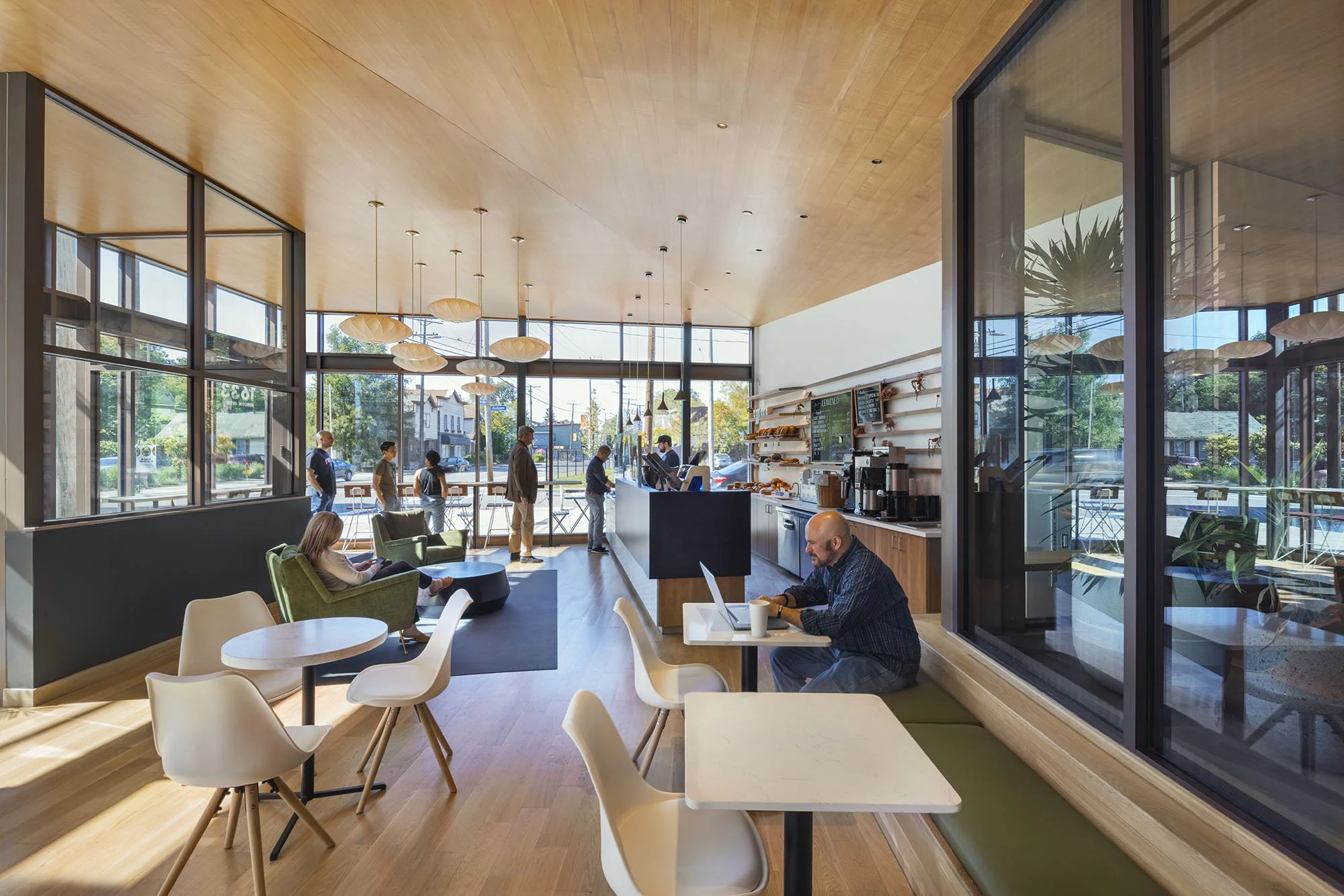
People give a space scale. They create movement. They help explain circulation and, most importantly, they show the hospitality experience actually happening.
That is especially important in hospitality architectural photography.
Capturing a Restaurant as a Place People Actually Use
The challenge is making sure the people support the composition rather than overwhelm it.
Sometimes I want just enough movement to show that the room is alive. Other times the activity itself is part of the story.
I remember the original Double Knot in Philadelphia feeling almost like a rave because it was so loud and energetic. That party atmosphere was not background noise. It was part of what the restaurant had been designed to create.
The best photographs have to communicate both the architecture and that human energy.
What Does a Long-Term Photographer–Client Relationship Make Possible?
One of the greatest benefits of working with someone over many years is trust.
You begin to understand what matters to them. They understand how you work. You can move faster, communicate more clearly and take creative chances that might not be possible on the first project.
Trust Creates Room to Push the Photography Further
I always want to deliver the images a client knows they need.
But I also want to find the photograph they did not know they needed.
That is where long-term collaboration becomes exciting. Once the expected views are covered, there is room to experiment with another composition, another moment or another way of seeing the space.
When a client who has pushed you for years looks at the photographs and says they are “amazing,” that still means a great deal to me.
“Only Work With Nice People”
Early in our relationship, I was given a simple piece of advice: Only work with nice people.
I have never forgotten it.
Years later, I watched the owner of a restaurant group with more than 1,000 employees take the time to make coffee for my very particular assistant and talk with us about hospitality and what makes people happy.
That tells you something.
Great hospitality is not only a concept written into a brand presentation. It is something people practice.
Great Hospitality Keeps Evolving, and the Photography Has to Evolve With It
After 20 years, what keeps me interested is that nothing stays exactly the same.
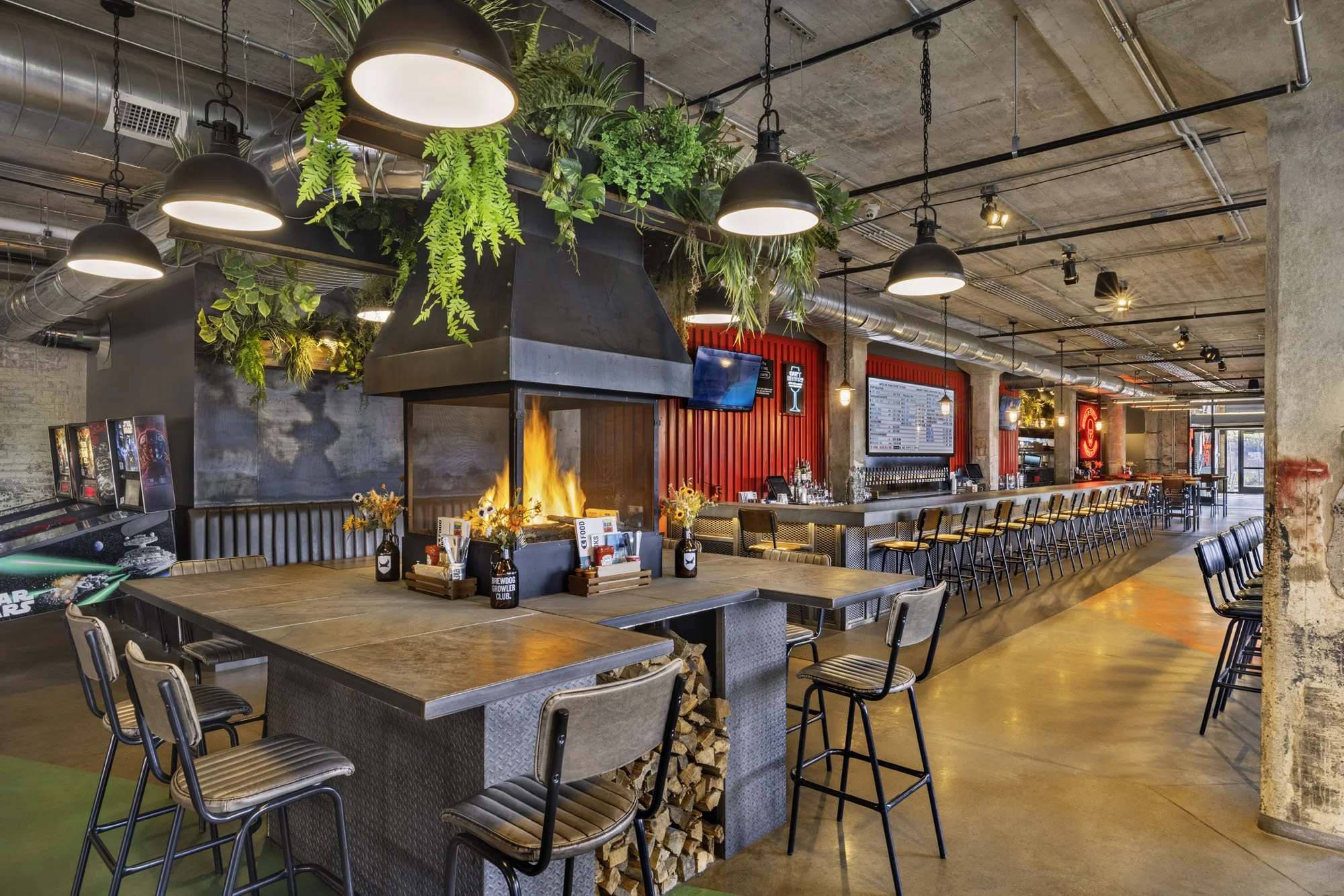
The restaurants continue to evolve. The design gets smarter. The food becomes more ambitious. The materials become more interesting. And every project asks me to see something differently.
The photographs also have a life beyond the shoot. They support websites, public relations, design publications, portfolios, investor presentations and the larger visual story of a growing restaurant brand. That makes it even more important to create images that feel specific to each place while still communicating the ideas connecting them.
At a time when so much of our world is mediated through technology and AI, restaurants still give us a reason to sit across from one another, share food and experience something made by hand and served with care.
I am grateful to photograph spaces built around that idea.
And I am especially grateful for clients who keep pushing what is possible, because they push me to do the same.